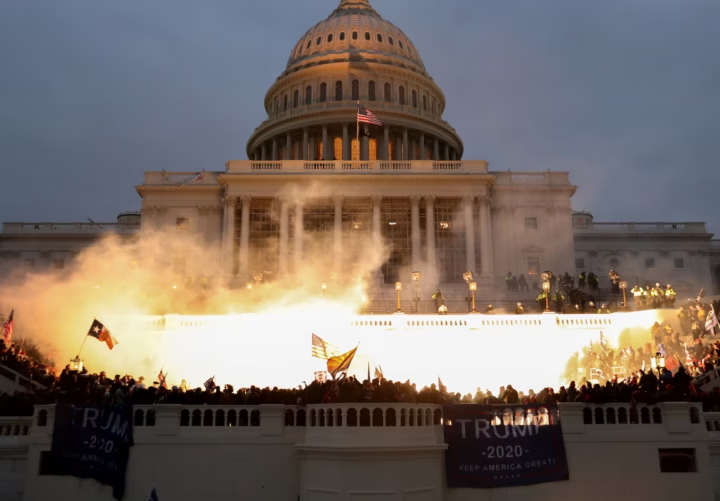
Loyalist № 9. Madison warned that even a chamber of sages could descend into a mob. Today’s Congress faces the opposite danger: silence, submission, and the slow death of deliberation. When its power was challenged, it did not resist – it abdicated.
Loyalist № 8. The Electoral College was meant to shield the presidency from partisanship and populism – but quickly became their tool. Federalist No. 68 offers a window into the original design and its failure, raising deeper questions: What can Westminster democracy teach us about balancing local and national interests? And have Canadians unknowingly created an Electoral College of Our own?
Loyalist № 7. The rise of factional politics in Canada and the U.S. reveals a deeper failure of design. Whether through regional fragmentation or ideological polarization, Our institutions no longer reward broad-based coalitions. Madison warned against these very dangers – and what they would mean for democracy in North America.
Loyalist № 6. What if the Framers had chosen a plural executive instead of a President? Revisiting a pivotal debate that sparked Federalist No. 70, We imagine the consequences of a very different choice – one that might have left the young United States of America fractured, its capital in ruins, and its future uncertain.
Loyalist № 5. The United States has long imagined itself the “indispensable nation,” a force for a rational global democratic order. Yet from Wounded Knee to Iraq, history shows a different pattern – one of unrestrained power, failed principles, and abandoned allies. Whether the myth was ever a force for good, the world may now be better off without it.
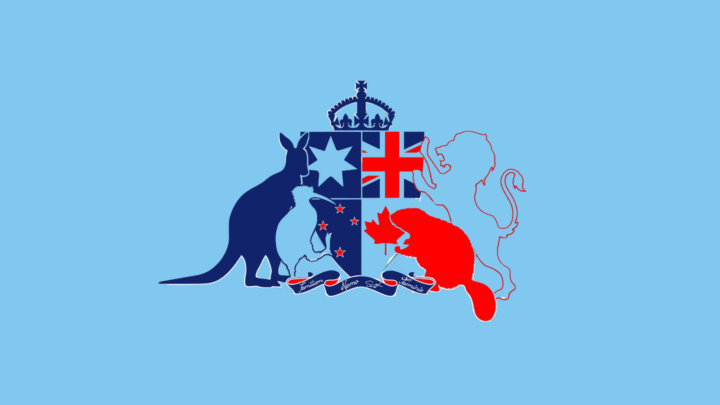
Loyalist № 4. Amid global instability and American unpredictability, Canada must move beyond its dependence on the United States. Just as John Jay saw shared values as the Union’s foundation, Canada should strengthen ties with Australia, New Zealand, and the UK through CANZUK – uniting Loyalist nations under the Crown to safeguard Our economies and political independence.
Loyalist № 3. Just as Hamilton feared that an incomplete economic union would invite a “policy of fostering divisions among us,” so have We Ourselves fallen prey to the same strategy employed by the new U.S. administration. In the face of American economic aggression and overt threats to annex Our country, Canada’s fragmented economic framework leaves Us vulnerable.
Loyalist № 2. Elijah Harper's 1990 stand against the Meech Lake Accord highlighted not only Québec's alienation but also the ongoing denial of Indigenous Peoples' autonomy and inherent rights under the Constitution. Harper said, "We were to recognize Québec as a distinct society, whereas we as Aboriginal people were completely left out." Can the fractures in Our federation be fixed?
Loyalist № 1. Much chatter has been made about the President-elect’s musings that Canada should join the Union as the 51st state. It was initially dismissed south of the border as “a joke” and then rapidly escalated to unveiled conversations about outright annexation. The idea had always received a more sober reception here, and for good reason.
Welcome! You've stumbled on The Loyalist Papers, an upcoming series of meditations on the meaning of freedom, democracy, and good governance in the twenty-first century. Ours is a four-year-long reading project based on the set of American essays known as The Federalist Papers – re-read in the context of contemporary North American politics.