
Loyalist № 18
To the Peoples of North America, this being a Loyalist Response to Federalist No. 5:
N
o taxation without representation was the rallying call of the American Revolution. But representation, not taxation, was the original cause. Long before the first imperial taxes were ever levied or the first shots fired in the Revolutionary War, the Thirteen Colonies had repeatedly given notice to the British Parliament of their dissatisfaction with imperial rule. Reform in governance was needed.
Stirrings of discontent began in 1754 at the outset of the French and Indian War, the North American theatre of the broader conflict that was the Seven Years’ War. The threat of attack from New France and repeated raids by neighbouring Indigenous nations laid bare the risks of an uncoordinated military strategy among the colonies. Disunion tempted ruination. From that point forward, grievances deepened beyond questions of defence, culminating in the Declaration of Independence.
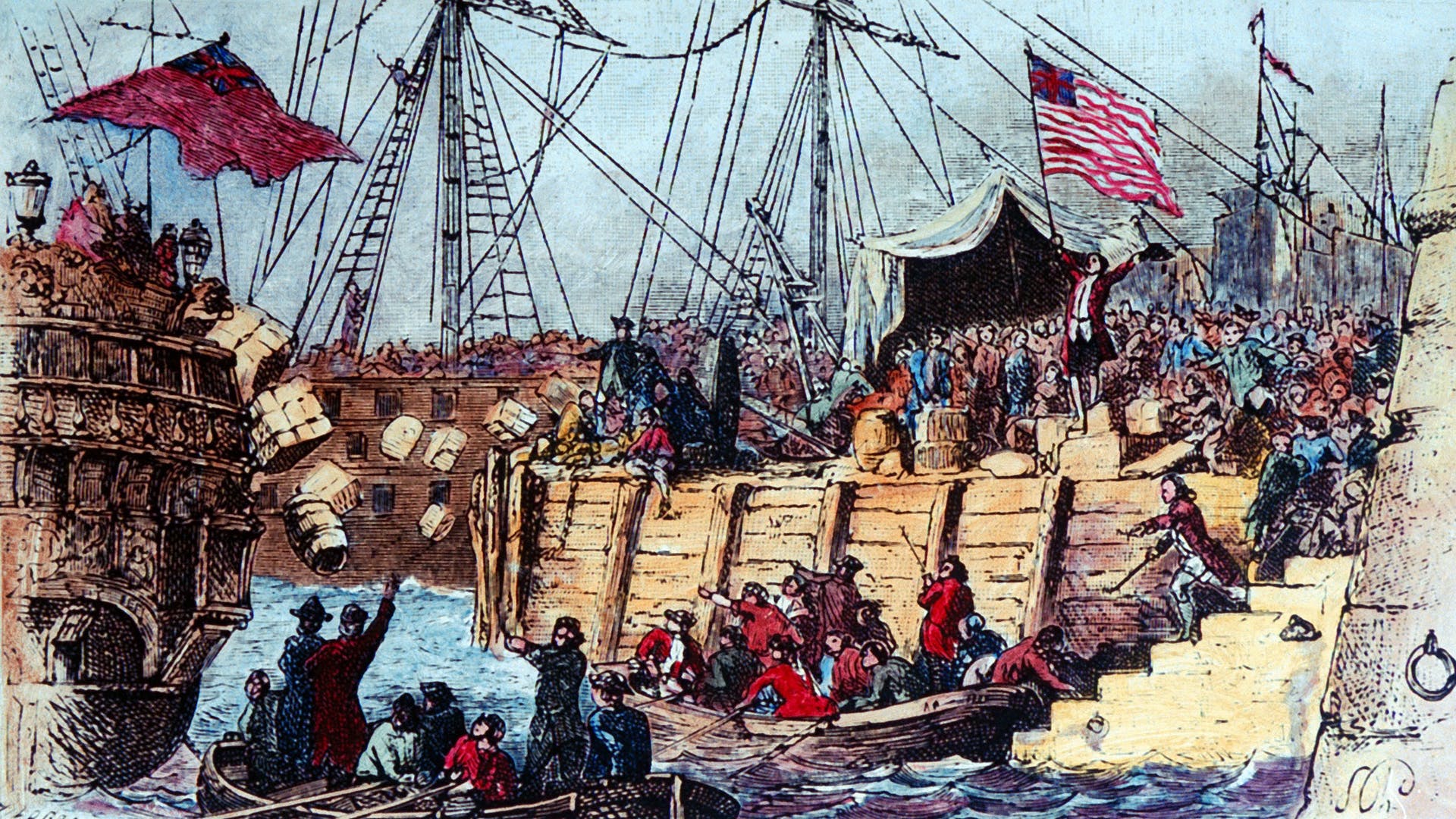
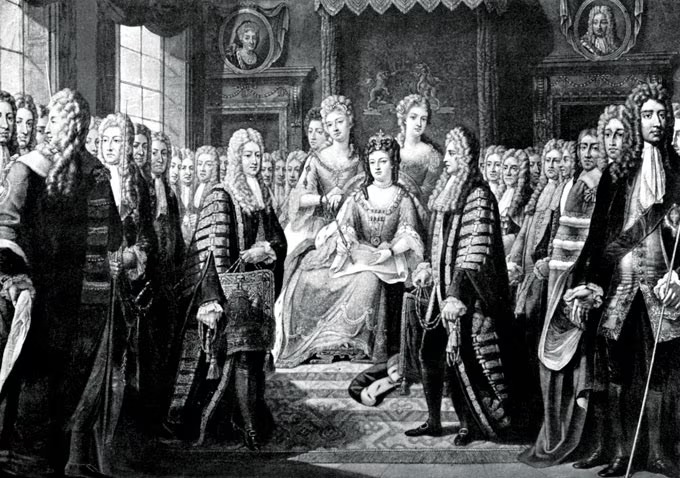
It was precisely the problem of disunion that John Jay addresses in Federalist No. 5. He opens it by quoting from Queen Anne’s 1706 letter to the Scottish Parliament on the subject of union with England:
“An entire and perfect union will be the solid foundation of lasting peace: It will secure your religion, liberty, and property; remove the animosities amongst yourselves, and the jealousies and differences betwixt our two kingdoms. It must increase your strength, riches, and trade; and by this union the whole island, being joined in affection and free from all apprehensions of different interest.”
Just as these two nations had been able to resolve their centuries-long history of conflict, so too, thought Jay, might the Americans “profit by their experience without paying the price which it cost them.” At the time of the Constitutional Convention, there were apprehensions that the Thirteen colonies did not share enough in common to become one united country. Jay responds to these worries, with no small measure of irony, by appealing to monarchical precedent. If the English and the Scots had been able to secure peace in Great Britain by uniting under a single Parliament and Crown, then the colonies should be able to do the same within a single republic and constitution.
Well before the Revolution, the Americans had contemplated different forms of union. Britain, however, absorbed in European rivalries, had paid little heed. In 1754, at London’s urging, a Congress of delegates from seven colonies1 convened at Albany, New York, to discuss plans for the defence of British North America. Conversations soon widened into broader questions of governance that had made colonial defence such a challenge in the first place. Here were drawn the first sketches to secure – borrowing from Jay’s later words – “union, strength, and good government within ourselves.”
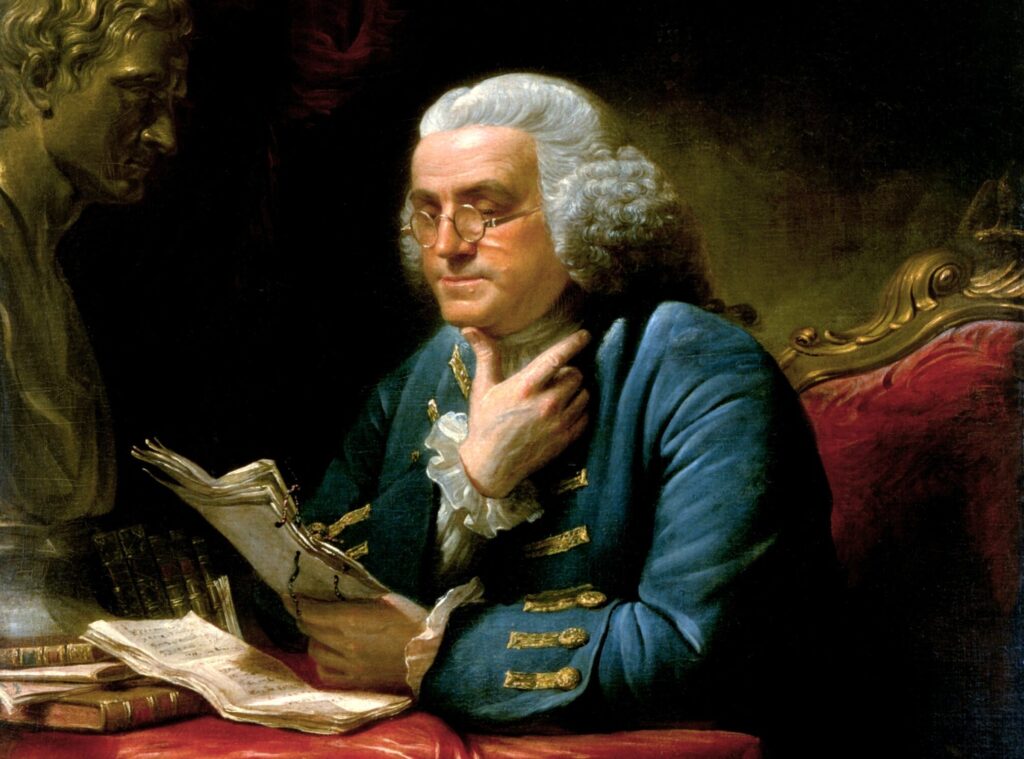
At Albany, the delegate from Pennsylvania, Benjamin Franklin, proposed the formation of a general government in British North America that would be responsible for military defence, relations with Indigenous nations, and, to some extent, taxation. It would be governed by a legislative “Grand Council,” appointed by the colonial assemblies, and an executive “President-General,” appointed by the Crown. In effect, Franklin had proposed a federal system of colonial government grounded firmly in British rule. The proposal came to be known as the Albany Plan of Union.
The Albany Plan came to nothing. It was rejected by both the colonies and Our Government in London – though for opposite reasons. The colonial assemblies balked at ceding any of their powers of taxation and feared that a continental legislature would upset the balance between local, federal, and imperial authority. Conversely, for the conservative-minded British, it was far too radical an idea: uniting the colonies under a single general government would risk creating a rival centre of power in the Empire.
Jay’s argument in Federalist No. 5 approaches the same point, but from the other side of the Atlantic: creating multiple confederacies in America would lead to competition for dominance, and, inevitably, war. “The North is generally the region of strength,” he says, “and many local circumstances render it probable that the most Northern of the proposed confederacies would, at a period not very distant, be unquestionably more formidable than any of the others.” Disunion, he warns, would render the American States “formidable only to each other.”
Jay’s commentary plays to the unique context of his time, in two ways. First, New York was faced with a clear choice: risk going it alone, combine with other like-minded states to form their own confederacy, or join a single Union comprising all Thirteen States. Going it alone was obviously unfeasible, since the State would quickly become a pawn amidst the power struggles between the larger confederacies. Yet joining one of those confederacies was also risky. Were New York to join with the northerners, together they might dominate the others for a time – but at the cost of arousing enmity and inviting their wrath. Union was the only remaining option.
Second, by quoting Queen Anne – at length – Jay subtly acknowledges that, even after the Boston Massacre, the Intolerable Acts, and the Revolutionary War, some affinity remained for the Empire from which the colonies had broken. He recognized that there was a significant Loyalist audience that could not be ignored.2 For them he warned that the States, if fragmented into multiple confederacies, would soon become “distinct nations,” just as England and Scotland had been prior to their union. He then pivots to appeal to New York’s commercial ties with Britain: “Different commercial concerns must create different interests, and of course different degrees of political attachment to and connection with different foreign nations.” Without a full and complete Union of the States, New York risked repeating on its own soil the cruel and bloody history of the British Isles.
Jay’s articulation of the three options facing New Yorkers in 1787 echoed anxieties felt across the Atlantic. What Jay feared for New York after the Revolution, the British statesman Thomas Pownall feared for the Empire before it. Having served as Governor of the Province of Massachusetts Bay and later as a Member of the British House of Commons, he was well acquainted with both sides of the issue. Ten years before the Revolution, he warned that “if any measure of such independency, formed upon precedents unknown to the government of the mother country at the time they were form’d, should be insisted on … no time should be lost to remedy or redress these deviations.”
Pownall, ever attuned to colonial sentiment, saw that Britain’s failure to integrate its provinces risked disaster. The remedy, he thought, was the same that had bound Wales and Scotland to England: representation at Westminster itself. In his Administration of the Colonies, first published in 1764, Pownall writes,
Our kingdom may be no more considered as the mere kingdom of this isle, with many appendages of provinces, colonies, settlements, and other extraneous parts, but as a grand marine dominion, consisting of our possessions in the Atlantic and in America united into a one interest, in a one centre where the seat of government is.
If, as Franklin’s earlier efforts had shown, union within America could not be secured, then for Pownall it had to be done at the imperial level. For him, this seemed a natural evolution of government in the anglosphere. For the colonists, he says, and more directly than Jay, “nothing can eradicate from their hearts their natural, almost mechanical, affection to Great Britain, which they conceive under no other sense, nor call by any other name, than that of home.”
Franklin, for his part, shared Pownall’s conviction that affection for Britain still ran deep among his compatriots. He thought it might still be harnessed to effect reform. His plan of union proposed at the Albany Congress had been rejected. It was revived at the First Continental Congress in 1774 by Joseph Galloway, a Loyalist delegate representing Pennsylvania and a close friend of Franklin’s, but was defeated by the slimmest of margins – 6 to 5. It was time to consider other means of effecting a reconciliation between the interests of the colonies and those of the Empire.
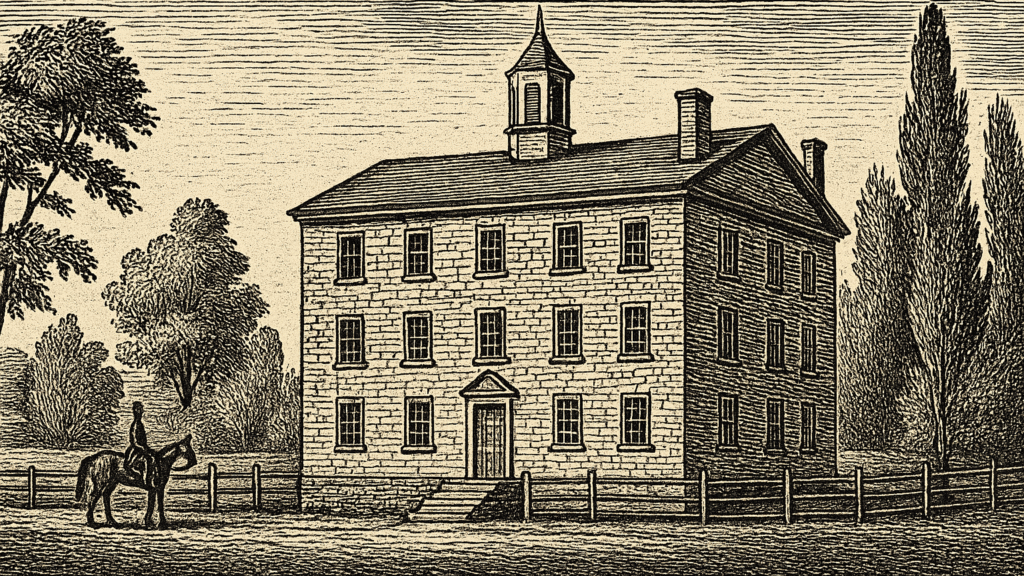
In a 1767 letter to Lord Kames, Franklin wrote, “I am fully persuaded with you, that a consolidating Union, by a fair and equal Representation of all the Parts of this Empire in Parliament, is the only firm Basis on which its political Grandeur and Stability can be founded.” The context of the letter implies that there was at least some support in London for the radical idea of reconstituting Westminster as an Imperial Parliament. Alas, Franklin continued, “the Time has been when the Colonies might have been pleas’d with it; they are now indifferent about it; and, if ’tis much longer delay’d, they too will refuse it.”
The opportunity to preserve the Empire – by extending its ideals of parliamentary democracy to its periphery – was slipping away.

Could an Imperial Parliament at Westminster, along the lines proposed by Pownall and Franklin, have prevented the sun from ever setting on the British Empire? Precedent suggests otherwise.
Consider the following. When the Acts of Union joining the English and Scottish parliaments were passed in 1707, the Scots were allocated 45 seats at Westminster, out of 558. This amounted to 8% of MPs despite Scotland having 16% of the overall population at the time of union (one MP per 22,000 people). England retained the remaining 513 seats (one MP per 10,000 people). Wales, long ago absorbed into the Westminster system under England, nominally held 24 of those. In practice, however, English and Welsh MPs formed a single bloc.
Consider next the later integration of Ireland in 1801, which created the United Kingdom of Great Britain and Ireland. With 32% of the combined population of the new kingdom, Ireland was allocated 15% of the seats in the expanded House of 658 (one MP per 52,000 people). In other words, Ireland was even more underrepresented compared to Scotland, which itself was underrepresented by share of population. England retained an overwhelming majority of three quarters of the seats, with just over half the population.
America in the 1760s would have comprised about a fifth of the population of a would-be transatlantic kingdom. Had the colonies been brought into Westminster under the same terms as Ireland would later be, they might have expected no more than perhaps 50 to 70 seats (maybe one MP per 45,000 people). Were those seats again simply added to the House of Commons, England would have retained 513 of 708 seats – an absolute majority with a clear minority of the population.
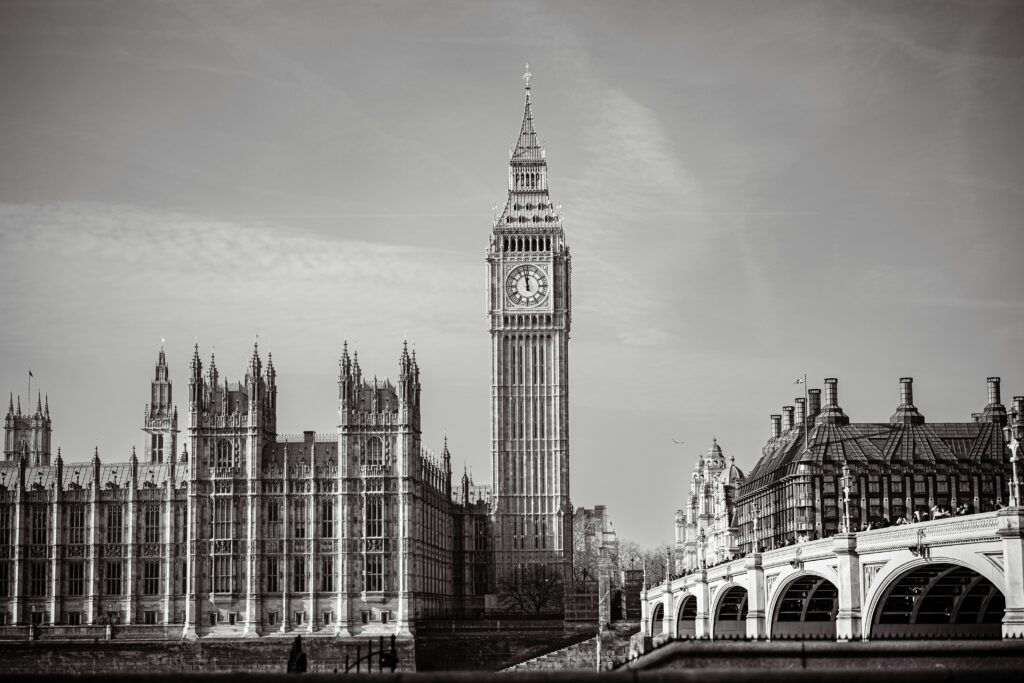
Franklin himself eventually acknowledged the futility of an Imperial Parliament as a way to head-off growing calls for outright independence. In his testimony before the House of Commons in 1766 on the repeal of the Stamp Act, the question of America’s hypothetical representation at Westminster was put to him directly. Franklin answered, “a small proportion of representatives for the colonies, sent to England, would be of no use, as they would be always outvoted.”
Britain’s commitment to parliamentary democracy had become warped under the strain of empire. For all their innovative thinking, both Franklin and Pownall grasped only too late a very hard truth indeed: that Parliament was, at its core, an instrument of English dominance. That realization was especially ironic, given that both men – and Jay afterwards – had appealed to the merits of Scottish union with England as a foundation for their arguments.
The sheer demographic diversity of the Empire made the very concept of an Imperial Parliament incompatible with the principles of English rights and liberty. At its height in 1913, it maintained possessions on six continents and ruled over a quarter of the world’s population. And yet less than 9% of that population were English.3 In a 670-seat Imperial Parliament organized under a system of representation by population, the English would have held a mere 61 seats, America 165, and India 428. With the rapid expansion of empire in the nineteenth century, an Imperial Parliament that could hold the Empire together would have quickly become untenable.4
The Parliament at Westminster had never been based on representation by population. To keep the Empire together, the British had to look elsewhere for solutions. Under growing pressure to retain its possessions in North America following the War of 1812 and an increasingly expansionist United States, they turned to an old idea: establishing a general government, with its own powers of taxation, that would be responsible for coordinating the defence and security of the remaining British possessions – the provinces of Canada, Nova Scotia, and New Brunswick, and the colonies of Prince Edward Island and Newfoundland.
The Charlottetown Conference of 1864 was originally called by Our Government in London to propose a maritime union, but the scope of debate was expanded when the Province of Canada, under Prime Minister Sir John A. Macdonald, asked to participate as well. Throughout the conference, delegates maintained accommodations on two ships, one of which was named the Franklin.
The Dominion of Canada came into being on July 1, 1867, constituted under the British North America Act. It comprised the three original provinces – reorganized into four – that had come together at Charlottetown; the two colonies of Prince Edward Island and Newfoundland opted not to enter Confederation at that time.5 The new Dominion was governed by its own Westminster-style parliament under a Crown-appointed representative, called not a “president-general” but a governor-general. Further dominions would later be created throughout the Empire according to the same model: Australia in 1901, New Zealand and Newfoundland in 1907, and South Africa in 1910.
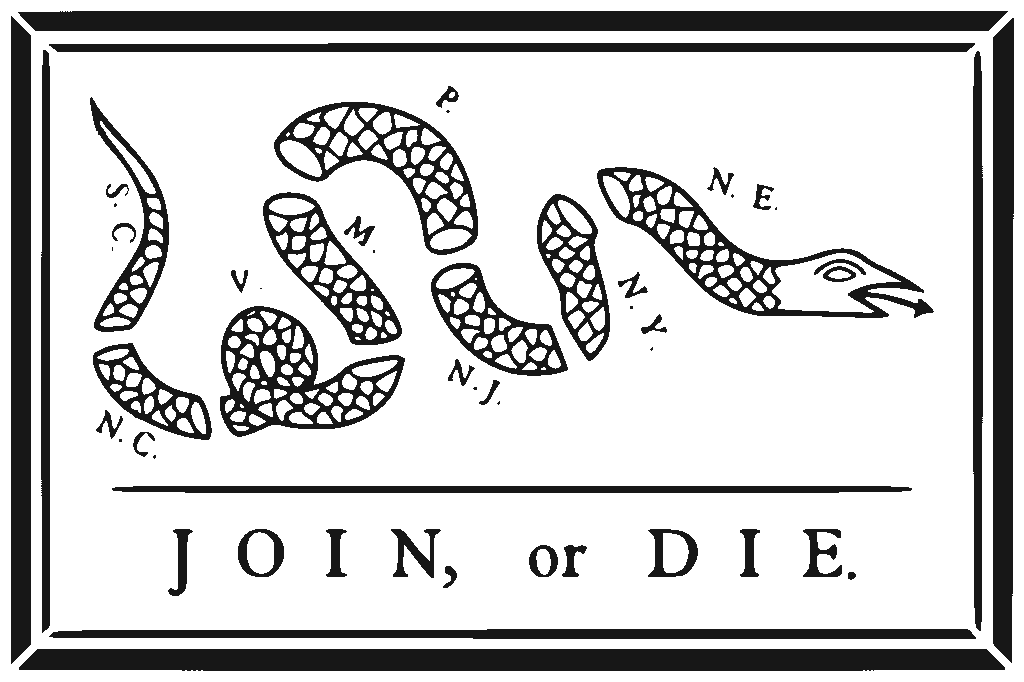
The Albany Plan, first proposed by Benjamin Franklin in 1754 to save the British Empire from disunion, had finally been realized. Jay closes Federalist No. 5 with an invitation to “candid men” to judge whether separate confederacies on one continent could secure liberty, prosperity, and peace between themselves. Today North America comprises two independent confederacies, one under a republican constitution and the other under the Crown. Jay was indeed right that constituting separate confederacies would be to create “distinct nations,” but he was wrong that it would inevitably lead to war: the distinct nations of Canada and the United States have been at peace with one another for more than two hundred years.
Today the sun may have set on the British Empire; but it has not – and never will – set on the idea of Westminster parliamentary democracy, which has proliferated across the globe. What began as an American idea leading to rupture did not, in the end, ignite rebellion across the Empire. Quite the opposite, in fact: it came to preserve loyalty to the Crown throughout the Realm. ♛


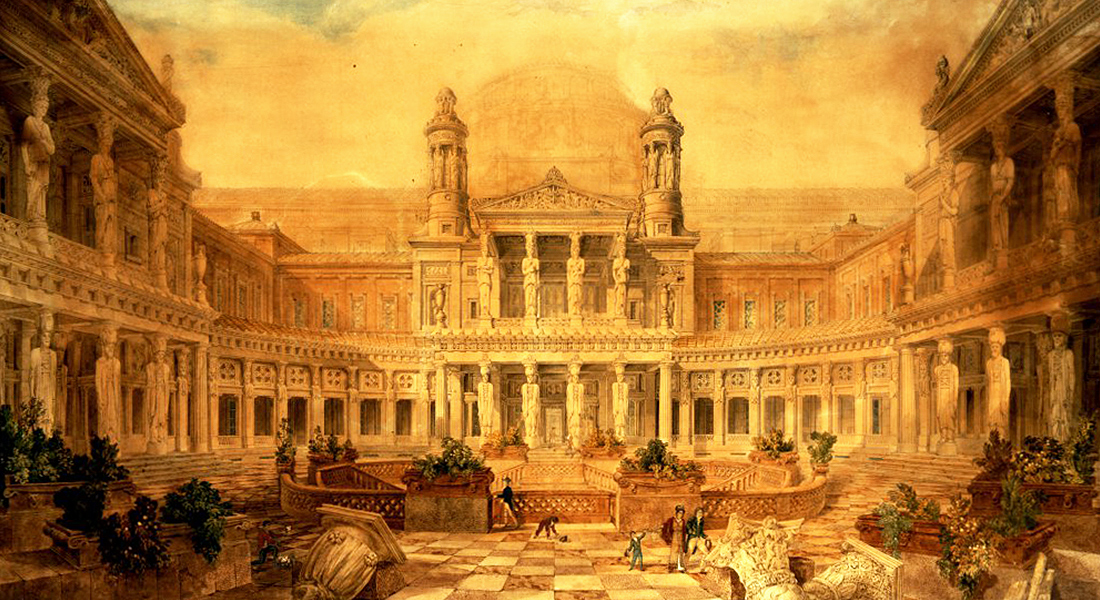
Cover image: Cover image: “Imperial Palace for Sovereigns of the British Empire” by Joseph Michael Gandy (1824). Watercolour.
Footnotes
- These included Massachusetts, New Hampshire, Connecticut, Rhode Island, Maryland, New York, Pennsylvania. In principle, Nova Scotia could have attended. It was, however, excluded, being largely Catholic and having a sizable francophone Acadian population – not to mention having no colonial assembly at the time, as the others that participated did. (Newfoundland, poorly governed and neglected by the British, could not have attended, and neither could the Canadas, which would be held by the French until the end of the Seven Years’ War in 1763.)
- Loyalist No. 14 intimated this same in its discussion of Hamilton’s prominent New York Loyalist rival Samuel Seabury.
- This number excludes the 100 million Americans who might have been kept in the fold had their grievances been more strategically addressed so as to prevent the Revolution.
- An Imperial Senate, with representation allocated equally by region, might have worked. But this idea is anachronistic since it is based on the very system of government devised by the Americans following their break from the Empire.
- While not all British possessions in North America chose immediately to join Confederation, this was clearly the end goal. The BNA Act, 1867 included in its preamble: “whereas it is expedient that Provision be made for the eventual Admission into the Union of other Parts of British North America.”