Loyalist № 20
To the Peoples of North America, this being a Loyalist Response to Federalist No. 52:
J
ean-Jacques Rousseau begins The Social Contract with the famous line, “Man is born free and yet everywhere he is in chains.” Nowhere might this have been more true than in Thomas Jefferson’s Revolutionary America. In his own home state of Virginia at the time of the Declaration of Independence, fully half the population was enslaved.
Well known to history as a slave-holder himself, Jefferson apparently saw no contradiction in justifying the dissolution of the political bands joining the Thirteen Colonies to the British Empire with the words,
We hold these truths to be self-evident, that all men are created equal, that they are endowed by their Creator with certain unalienable Rights, that among these are Life, Liberty and the pursuit of Happiness.
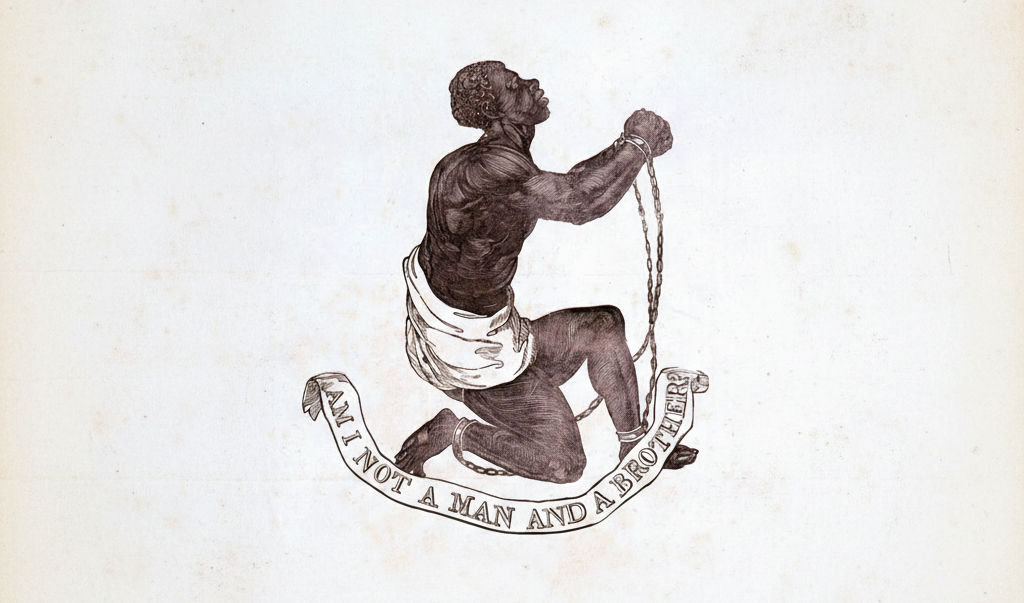
Slavery came to an end across the Empire following Westminster’s adoption of the Slavery Abolition Act of 1833. In America, however, the uneasy compromises reached between North and South at Philadelphia would lurch on for another 28 years still. In the land of the free and home of the brave, the question of slavery would be answered not by a simple Act of Congress but by spilling the blood of more than one million Americans.
When Lincoln rose to speak at Gettysburg four-score and seven years after the Declaration of Independence, he had to contend with the unenviable inheritance of an undefined “We the People” that American government was to be of, by, and for.

All three authors of the Federalist Papers were, to varying degrees, philosophically opposed to slavery.1 Yet not one of their 85 Papers directly acknowledges the problem of slavery in America. For them, it was of the utmost importance to establish a single Union to safeguard the States’ mutual peace, prosperity, and liberty. Like the Framers, they saw the Constitution not as the culmination of a historical process, but rather the beginning of one: bending the long arc of history toward a “more perfect union,” as the Constitution proposed to do.
Hence the willingness of the Delegates at Philadelphia to enter into all manner of uneasy compromises. Slavery was a word that would not appear at all in the Constitution until it was abolished with passage of the Thirteenth Amendment, yet it was repeatedly debated indirectly on topics ranging from trade (whether humans could be bought and sold), property rights (whether Northerners would be compelled to return fugitive slaves), the militia and standing armies (whether the federal government could be relied on to put down slave revolts), the composition of the Senate (whether the North or the South would dominate), and, most infamously the three-fifths compromise (whether slaves should be counted when determining representation by population in the House).
For the long process of perfecting the Union to play out, the popular branch of Congress would need to reflect the evolving ideals of the American people. In Federalist No. 52, Madison sets out to make a critical part of this argument, writing that the U.S. House of Representatives must “have an immediate dependence on, and sympathy with, the people.” While he meanders throughout on questions of the ideal term length, Westminster precedent, and the dictatorial tendencies of Monarchs past, his main purpose is to show that the House, through regular biennial elections, would work to ensure that the federal government operated on the principle of popular consent.
But who are the people upon whose consent government action is legitimized? In principle, the Constitution would seem to provide a clear answer. To be eligible to sit in the House of Representatives, one must be 25 years of age, seven years a citizen, and a resident of the state one is to represent.2 On this basis, Madison insists that:
the door of this part of the federal government is open to merit of every description, whether native or adoptive, whether young or old, and without regard to poverty or wealth, or to any profession or religious faith.
Madison is clearly addressing himself here to the various restrictions that had existed at one time or another on who was eligible to sit in the British House of Commons. The Act of Settlement of 1701, for example, barred certain officers of the Crown, Catholics, and anyone not born within the Crown’s dominions3 from becoming Members of Parliament. Likewise the Property Qualification Act of 1711 effectively barred anyone without significant land holdings from taking up a seat in the House.
Madison’s implicit argument is technically true. It was, in principle, easier to join the U.S. House of Representatives than it was the British House of Commons. Yet his more overt argument for the essential meritocracy of the Congress compared to Parliament is overstated: one can, after all, only enter the House upon being elected. Who, then, are the people upon whom the will of Congress is meant to “have an immediate dependence,” as Madison puts it?
The Constitution explicitly declines to answer this question, enshrining instead an absolute deference to the constitutions of the several States.4 Madison, too, casually waves it away, arguing:
To have reduced the different qualifications [for electors] in the different States to one uniform rule, would probably have been as dissatisfactory to some of the States as it would have been difficult to the convention. The provision made by the convention appears, therefore, to be the best that lay within their option.
Read against the history of his time, this part of Madison’s argument is telling. The Delegates at Philadelphia were deadlocked not just over slavery but over the very essence of popular government. Despite Madison’s praise for the meritocracy of the U.S. House of Representatives, the right to vote was jealously guarded by the few.
Nowhere did suffrage extend to slaves. Free Black men could vote in some states but not others. Property requirements tied to the vote varied wildly state by state – in South Carolina a minimum 50-acre freehold was required, while in Pennsylvania there was no such requirement at all, provided the elector had paid his taxes. Only in New Jersey could women meeting all other requirements cast a ballot, and even then only briefly: women’s suffrage was extinguished in 1807.
Clearly the North and South had fundamentally different interpretations of Jefferson’s “self-evident” truths when it came to the question of who was entitled to vote. The result was a patchwork of state and federal electorates across the Union. At best the variety of distinct electorates had merely inconsistent foundations; at worst their differences undermined the very purpose of the federal Constitution in its stated goal to form a more perfect Union of the States, and a single people who had owed Britain an explanation of “the causes which impel them to the separation” of 1776.5
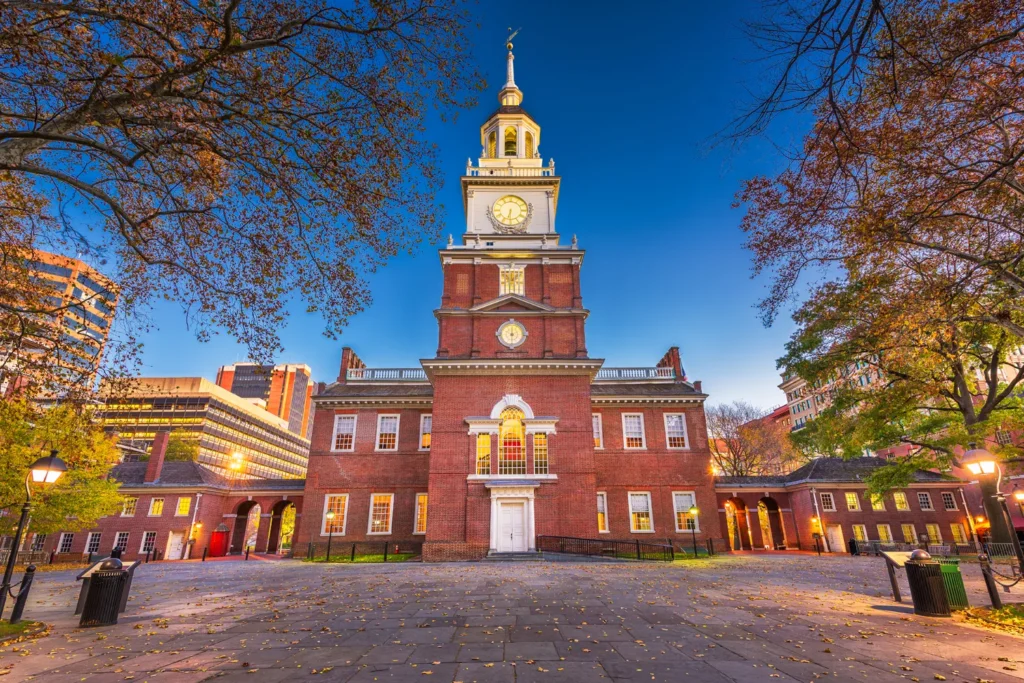
Absurdities, both theoretical and real, abounded. Consider the minimal qualifications under the Constitution for sitting in the House of Representatives in the context of the more restrictive voting rights as defined by each of the several States. At the time the Constitution was adopted, those of Madison’s own home state of Virginia were among the most restrictive of any. Yet there, under the federal Constitution, a twenty-five-year-old free Black man could – in principle – stand for election to the U.S. House of Representatives. He could not, however, cast a ballot for his own candidacy. Even more absurdly, were he to travel to the capital to take up his seat, he could be arrested and returned to Virginia in chains as a fugitive slave.6
Bending not toward justice, the Virginia statehouse legally expelled all free Black men from the State in 1806. Later, a series of like-minded laws passed in Maryland (1810) and South Carolina (1835) abolished suffrage for free Black men, even those who met all other requirements like age, residency, and property. Even in New York, suffrage was expanded in 1821 to include all white male residents, while at the same time imposing a new race-based property threshold on free Black men that few could ever hope to meet. And that is to say nothing of the later Jim Crow laws, poll taxes and literacy tests, and the Ku Klux Klan’s campaign of terror against Black citizens in the South in the early twentieth century.7
All of which experience directly challenges Madison’s strategically optimistic view of inevitable historical progress in Federalist No. 52 and across The Federalist Papers more generally. Giving voice to his expectation of an ever-expanding sphere of justice and liberty achieved through the ballot, he writes, “it cannot be feared that the people of the States will alter this part of their constitutions in such a manner as to abridge the rights secured to them by the federal Constitution.” The broad qualifications to sit in the House of Representatives – free as they were, to the credit of the Framers, of any mention of race, gender, religion, or property – were thus envisioned to be a new standard of suffrage that, in time, the States would eventually live up to.
“The definition of the right of suffrage,” Madison rightly asserts, “is very justly regarded as a fundamental article of republican government.” To cast a ballot in an election is the highest form of expression of belonging to a political community founded on the principle of popular consent. That is because, in a republic, the people are sovereign, not a crown; the many decide, not the one.
Who, then, are the many to be counted? The Constitutional Convention was unable to answer that critical question because of the Framers’ irreconcilable differences on the single issue of slavery. In Federalist No. 52, one senses Madison hurrying past that very question – glossing over the very first words of the proposed Constitution, “We the People” – just as the Framers did at Philadelphia. Both he and they believed that deferring the question was a reasonable price to pay for ratification of the Constitution sooner, if not perhaps at all.
Barack Obama began his meteoric rise in politics with a speech he gave to the Democratic National Convention in 2004. Then a little-known U.S. Senator from Illinois, Obama’s speech laid the foundation for what would become, just four years later, his wildly improbable campaign to become America’s first Black President. Quoting Jefferson’s “self-evident truths” and the Declaration of Independence, Obama went on to declare:
There’s not a liberal America and a conservative America – there’s the United States of America. There’s not a Black America and white America and Latino America and Asian America; there’s the United States of America. The pundits like to slice-and-dice our country into Red States and Blue States … [But] We are one people, all of us pledging allegiance to the stars and stripes, all of us defending the United States of America.
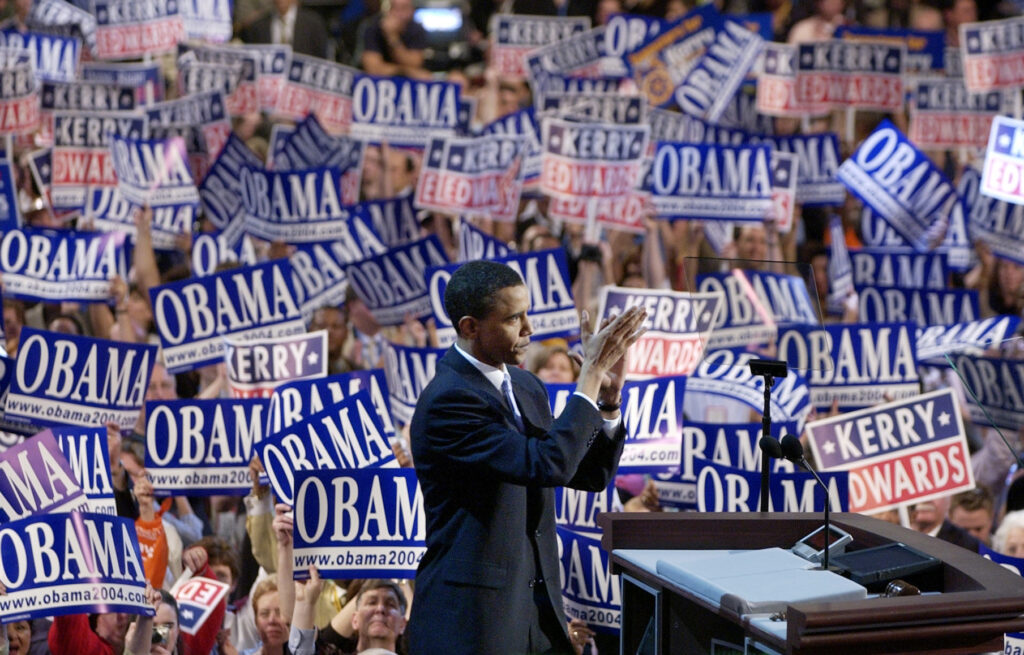
To thundering applause, Obama concluded his speech with Madisonian optimism: “Out of this long political darkness a brighter day will come.”
Yet America is not, and never was designed to be, a Union of the people, by the people, for the people. Contrary to Obama’s confident, if historically ironic, declaration, the Constitution established a Union of States not of peoples – of Red States and Blue States, of Northerners and Southerners, of two fundamentally different peoples living uneasily together under a single federation. It is a country where sovereignty emerges selectively and unequally.
For all its mythological origins, America remains a country founded on contested – not self-evident – truths. ♛


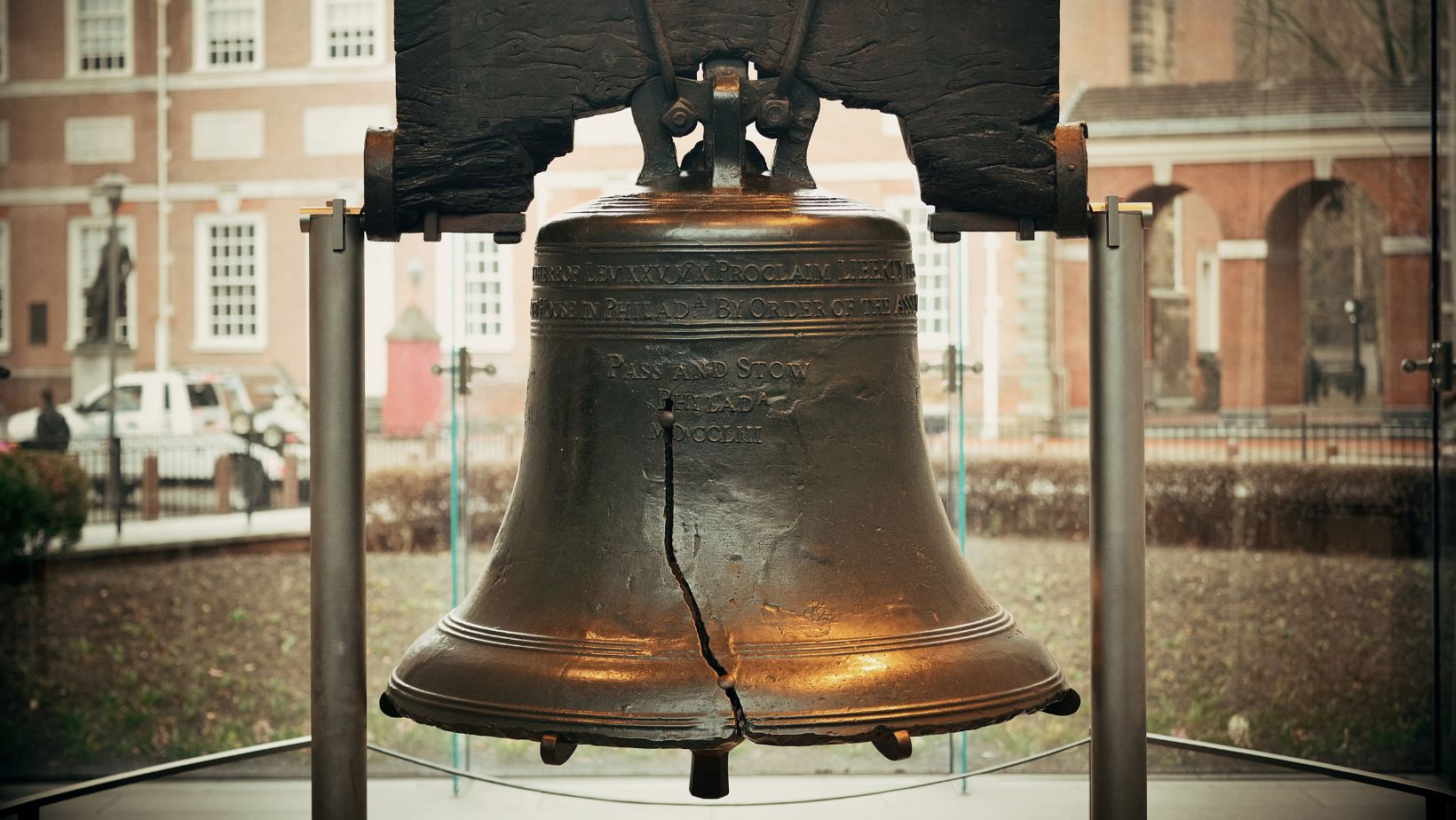
Cover image: The Liberty Bell in Philadelphia ironically displays the cracks at the heart of the American Founding. The crack in the bell appeared in 1835 – Two years after slavery was abolished throughout the British Empire and twenty-six years before the outbreak of the Civil War. // Courtesy of the National Park Service.
Footnotes
- Hamilton was consistently opposed to slavery in principle and involved himself with New York’s abolitionist circles; Madison, though he admitted slavery was wrong, believed it would eventually wither for economic reasons even while he defended it in practice; and Jay, having at one point held slaves but set them free, believed in the gradual abolition of slavery over time.
- Article I, Section 2, Clause 2: “No Person shall be a Representative who shall not have attained to the Age of twenty five Years, and been seven Years a Citizen of the United States, and who shall not, when elected, be an Inhabitant of that State in which he shall be chosen.”
- Meaning England (including Wales), Scotland, and Ireland. These dominions were not united under a single kingdom until the Acts of Union of 1707, uniting England and Scotland as Great Britain; and the Acts of Union of 1800, uniting Great Britain and Ireland as the United Kingdom.
- Article I, Section 2, Clause 1: “… the Electors in each State shall have the Qualifications requisite for Electors of the most numerous Branch of the State Legislature.”
- Declaration of Independence, paragraph 1.
- There is a striking analogue to this theoretical scenario that actually played out in nineteenth-century Canada. Louis Riel, a Métis leader and Founding Father who brought Manitoba into Confederation in 1870, was thrice elected to represent the riding of Provencher in the House of Commons. A fugitive of the Red River Resistance (1869-70), he never took up his seat in Ottawa for fear of arrest, despite having met the legal requirements to stand for election as an MP. He was executed for high treason in 1885 for his role in the Northwest Resistance that same year.
- See also CNN’s timeline on the history of Black voting rights.