Loyalist № 11
To the Peoples of North America, this being a Loyalist Response to Federalist No. 67:
I
n its original form, the President of the United States was conceived to be little more than a committee chair – not so much a chief executive as a chief bureaucrat. Presiding over the “Committee of the States” under the Articles of Confederation, the President served as something more akin to the Secretary General of the United Nations. And as with the UN, the early Presidency struggled to enforce the Union’s rules and responsibilities upon its own member states. Following the Revolution and the conclusion of peace with Great Britain, the need for a stronger federal government, led by an empowered President, had become clear.
Yet Americans worried that the Revolution might be co-opted to establish the very kind of government they had fought to resist. In Federalist No. 69, Alexander Hamilton explores the nature of executive power under the U.S. Constitution. His main argument is that, powerful as the President would need to be, the office would fall far short of European-style monarchies because its power would be effectively counterbalanced by the legislature and judiciary as co-equal branches of government.1 Hamilton advances this line of argument by drawing a series of stark contrasts between the King of Great Britain and the new executive office.
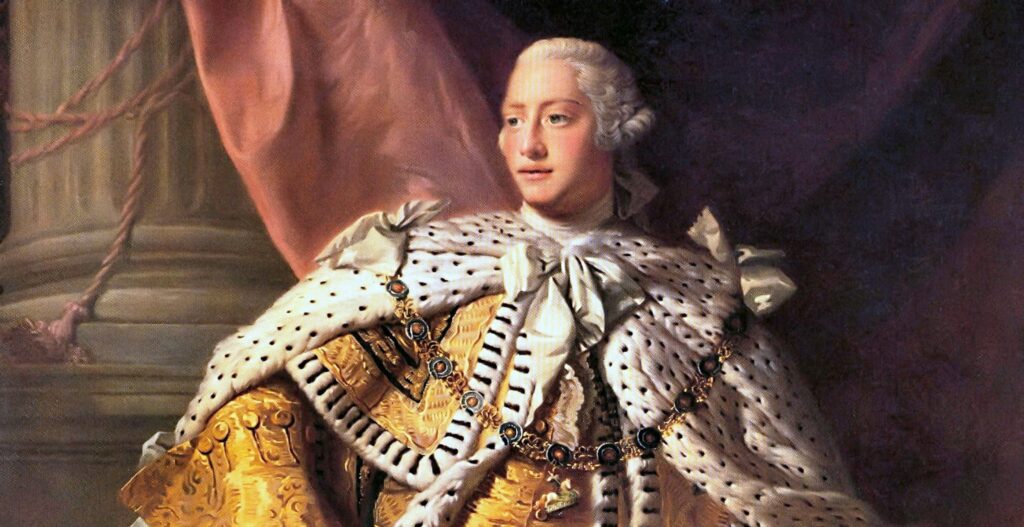
First, the King holds a hereditary position for life; the President is subject to election every four years. Second, the King by his very nature is “sacred and inviolable”; the Office of the President is established by and exists under the law. Third, the King enjoys an absolute veto and can refuse royal assent to any bills that are duly passed by the legislature; the President holds a “qualified” veto over legislation, one that can be overturned by Congress. Fourth, the King enjoys absolute authority in the realm of what we would now call international relations, including declarations of war; the President may sign treaties and declare war only with the approval of Congress. Fifth, the King may appoint anyone to high office (i.e., Cabinet) at any time and at his own discretion; the President may do so only for positions that have already been established in law and with the approval of the Senate. Sixth, the King may prorogue or even dissolve the legislature; the President at best can exercise limited powers of adjournment over Congress.
These points of comparison were entirely sensible at the time Hamilton was writing. Rulers across Europe did then indeed hold absolute power under the Divine Right of Kings, which neither required nor generally sought the consent of the people in the exercise of state power. That said, Hamilton does seem to have underestimated the organic flexibility, stability, and balance of Westminster constitutions. Ours is a living tree that grows over time, adapting traditions and conventions to changing circumstances; it is not something that is fixed in writing for all time. Today, the holder of the Crown no longer rules but rather reigns.
In Great Britain modern executive power – the prime ministership – emerged gradually, not all at once. Its origins can be traced to 1721, when Robert Walpole, first Earl of Orford, served with the distinction of being “first” among His Majesty’s Ministers. Over time it became customary, then traditional, then conventional for the Crown to appoint a Prime Minister. Now the role is a defining feature of all Westminster democracies. But nowhere is the Prime Minister’s Office mentioned in Canada’s original Constitution of 1867; nor, even more significantly, in the Constitution that was patriated in 1982, when there was every opportunity to codify the powers of the country’s chief executive. It still does not exist in written law in the United Kingdom.
During this centuries-long period of evolution, the powers of the Crown steadily devolved through unwritten traditions and conventions to the elected members of the House of Commons, including the de facto power of the Prime Minister to call elections, to appoint members to Cabinet, and to set foreign and domestic policy. These are all powers that Hamilton argues – rightly – should belong to the people’s representatives. As prime ministers came to “rule” as heads of government, British monarchs retained what are called the “reserve powers of the Crown” that now define their more limited role as reigning head of state.
The devolution of the Crown’s prerogatives to elected Members of Parliament across what is now the Commonwealth displaced the Divine Right of Kings and established the rights of subjects, as citizens, to freely choose their governments. Importantly, that devolution of powers also coincided with the establishment of the principle of Responsible Government – the idea that His Majesty’s Government is ultimately accountable to the people by means of the House rather than to the King himself. This means that the government of the day may continue to govern only so long as the Prime Minister enjoys the confidence of the House.
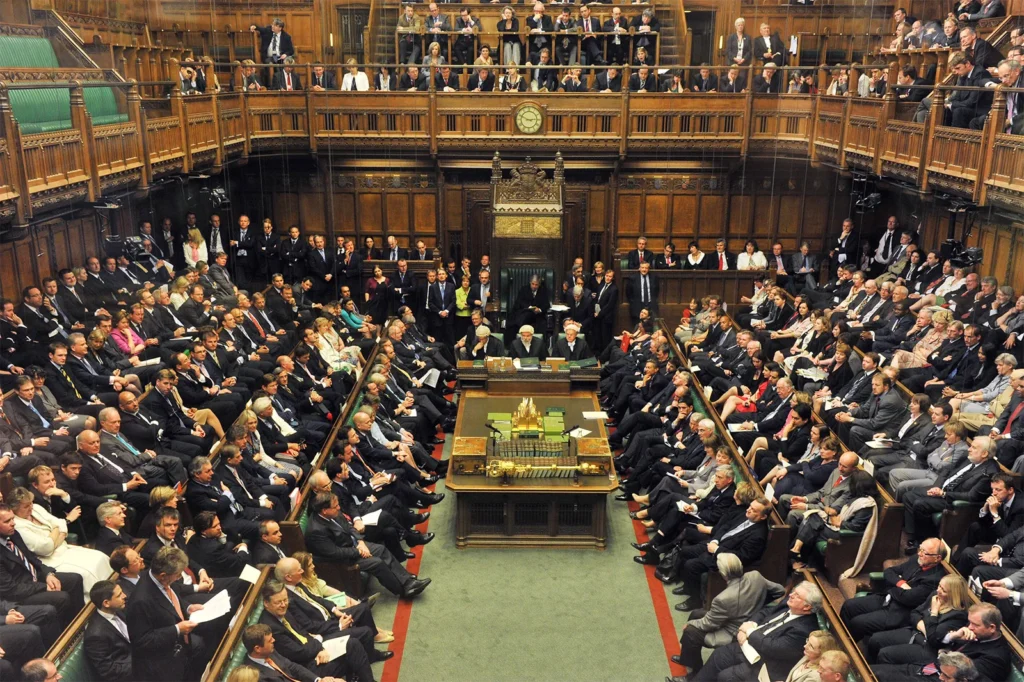
While the powers of the Crown have increasingly devolved to elected Westminster Parliaments, the American executive has steadily been amassing powers under what Arthur Schlesinger Jr. first called the “Imperial Presidency” in 1973. In his book by the same name, Schlesinger argues that the checks and balances designed by the Framers and promoted by Hamilton have been bypassed, displaced, and eroded one by one, particularly in the areas of war, foreign affairs, and some domestic policy. Beginning in the mid-nineteenth century and then accelerating through the twentieth, the Presidency has usurped significant legislative and policy-making powers from Congress.2
During his entire Presidency, George Washington issued a grand total of 8 Executive Orders compared to the wildly out-of-proportion 3,716 that Franklin Delano Roosevelt issued between 1933 to 1945, which he largely used to implement the New Deal. Using similar tactics, the first Trump Administration entirely abandoned the Paris Climate Agreement and the Iran nuclear deal, altered the longstanding North American Free Trade Agreement (NAFTA), and levelled sanctions against top officials of the International Criminal Court, the treaty establishing which the Clinton Administration had signed in 2000. From Richard Nixon onward, successive administrations have massively – and illegally – expanded the domestic surveillance state, as exposed by Edward Snowden. Consider, too, that Congress last declared war in 1942, yet the United States has been routinely involved in armed conflicts around the world ever since.
Hamilton thought that this kind of executive overreach would be kept in check by public opinion and regular elections. The President, he writes,
is to be elected for four years; and is to be reëligible as often as the people of the United States shall think him worthy of their confidence. In these circumstances there is a total dissimilitude between him and a king of Great Britain.
Unlike the Prime Minister in the Westminster parliamentary system, however, the President of the United States is not subject to questioning by the legislature, nor can confidence in him be withdrawn by the people’s representatives should he violate longstanding political conventions and traditions – even if public opinion were to turn against him decisively. Only one president has ever resigned before the end of his term.
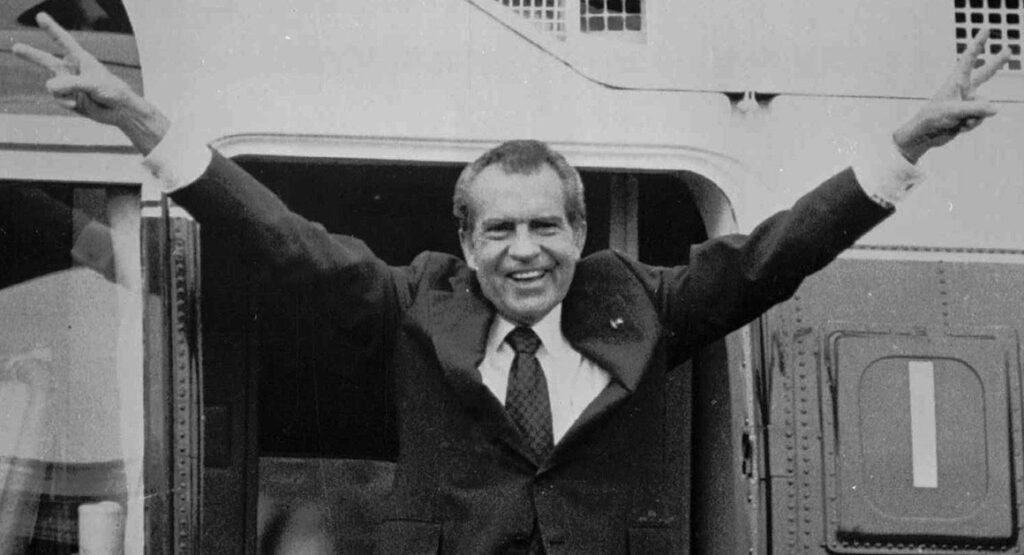
In the case of a disgraced president who refuses to resign, the people are left with only one remedy: impeachment. In the entire 235-year history of the American Republic, only four impeachment proceedings have been undertaken against three presidents – and none of them were convicted and removed from office. This is because of an important difference in onus between the Westminster and presidential systems. Whereas the Prime Minister and his or her government must continually maintain the confidence of the House, the President is presumed to retain it. This single difference explains the much greater sensitivity to political conventions and the popular will that exists in Westminster Parliaments. In the last two presidential terms (2016-24), for instance, the United Kingdom had six different prime ministers as the country struggled to devise a sensible plan for Brexit.
Now, with a President well into his second term after having been impeached twice during his first, many now believe that impeachment has become a wholly ineffective remedy despite its relative disuse. Failing, perhaps, to appreciate fully the risk that demagogues might pose to the Republic, Hamilton believed that presidents should be eligible for re-election indefinitely. In today’s age of hyper-polarized partisanship, where standards of civil discourse continually sink to new and untold depths, the term limits imposed by the 22nd Amendment may just prove to be the last effective safeguard of American democracy. ♛


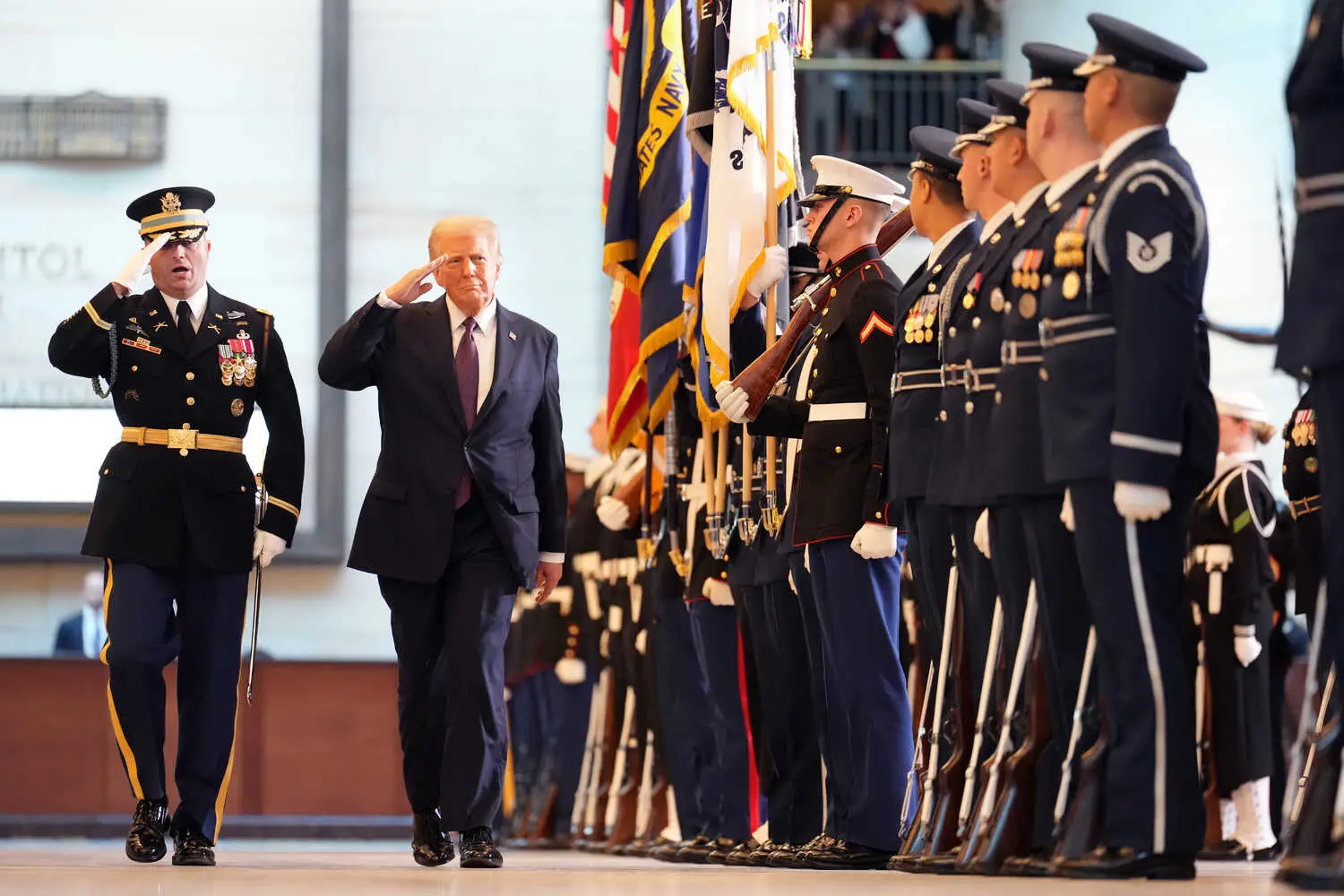
Cover image: President Donald J. Trump inspects a full honour guard at Joint Base Andrews, Maryland, on January 20, 2021. Photo by Sgt. Kevin M. Roy (2021). Courtesy of the U.S. Department of Defense; public domain.
Footnotes
- The nature and functioning of these other branches are considered more closely elsewhere in the Federalist Papers and will be taken up by Us in due course. (Spoiler alert: they have atrophied.)
- It must be said that Canadian parliamentary democracy has seen a similar concentration of power in the Prime Minister’s Office, in ways that We will explore in subsequent Loyalist Papers.