Loyalist № 12
To the Peoples of North America, this being a Loyalist Response to Federalist No. 8:
K
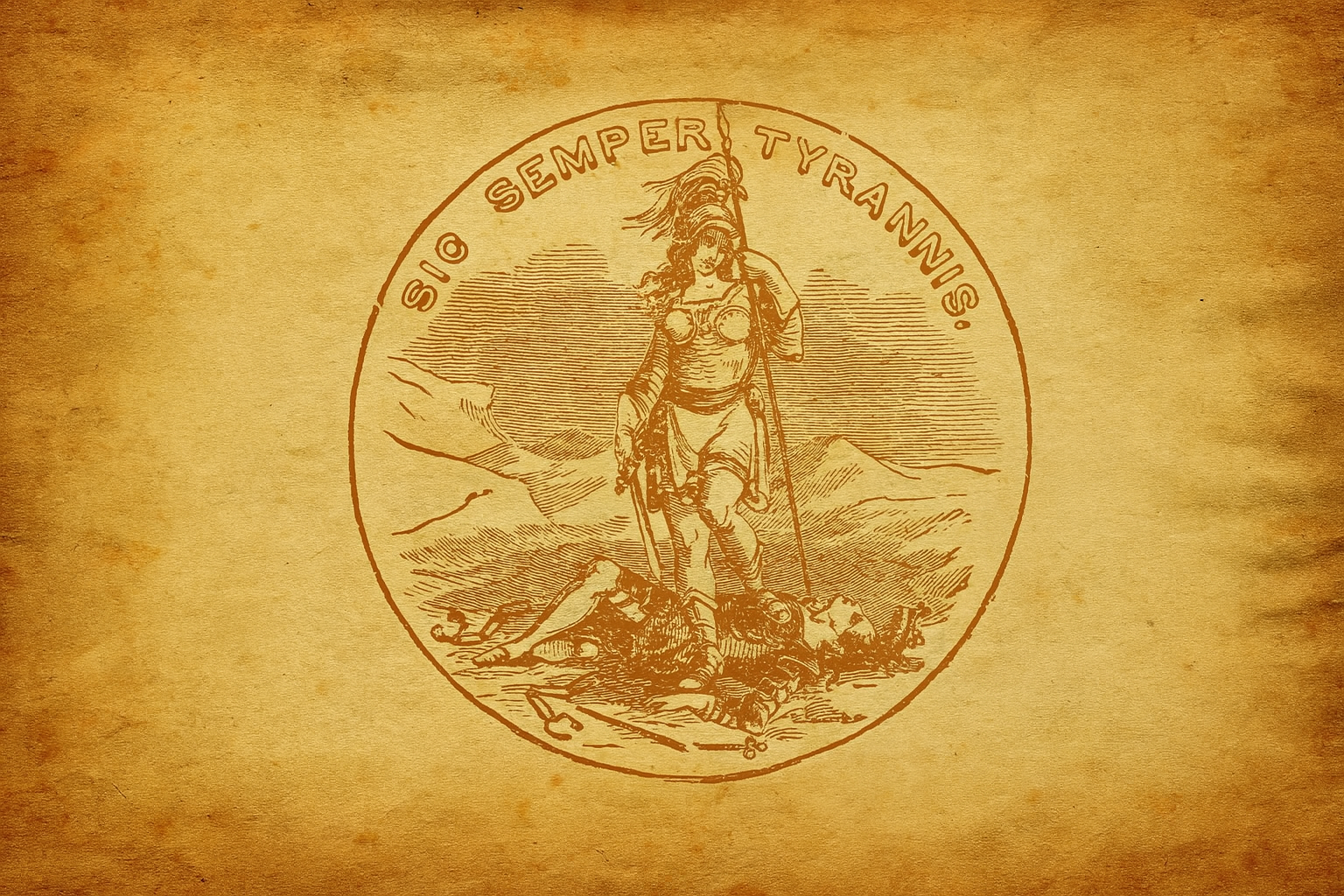
ing Abraham Africanus the First. That’s the derisive moniker given to Lincoln by a northern Democratic faction called the Copperheads, who had charged the President with exceeding his constitutional authority in prosecuting the Civil War. They were not wrong. Like the Copperheads but not himself one, John Wilkes Booth, Lincoln’s assassin and a Confederate sympathizer, is said to have hurled the phrase sic semper tyrannis – “Thus always to tyrants” – at the President alongside the bullet that fatally wounded the Great Emancipator at Ford’s Theatre in 1865.
The Copperheads were among the leading critics of the dramatic expansion of executive power under Lincoln as a wartime President. Ironically, the Framers keenly foresaw that exact scenario even while they utterly failed to forestall it by grappling with the question of slavery at the Constitutional Convention. In Federalist No. 8, Alexander Hamilton warns that prolonged periods of war risk fundamentally transforming the character of government, centralizing power in the hands of the executive and making military authority a permanent fixture of political life. The history of Europe, he argues, provided a dire warning: the longer a nation is at war, the greater its tendency to sacrifice liberty in favour of security.
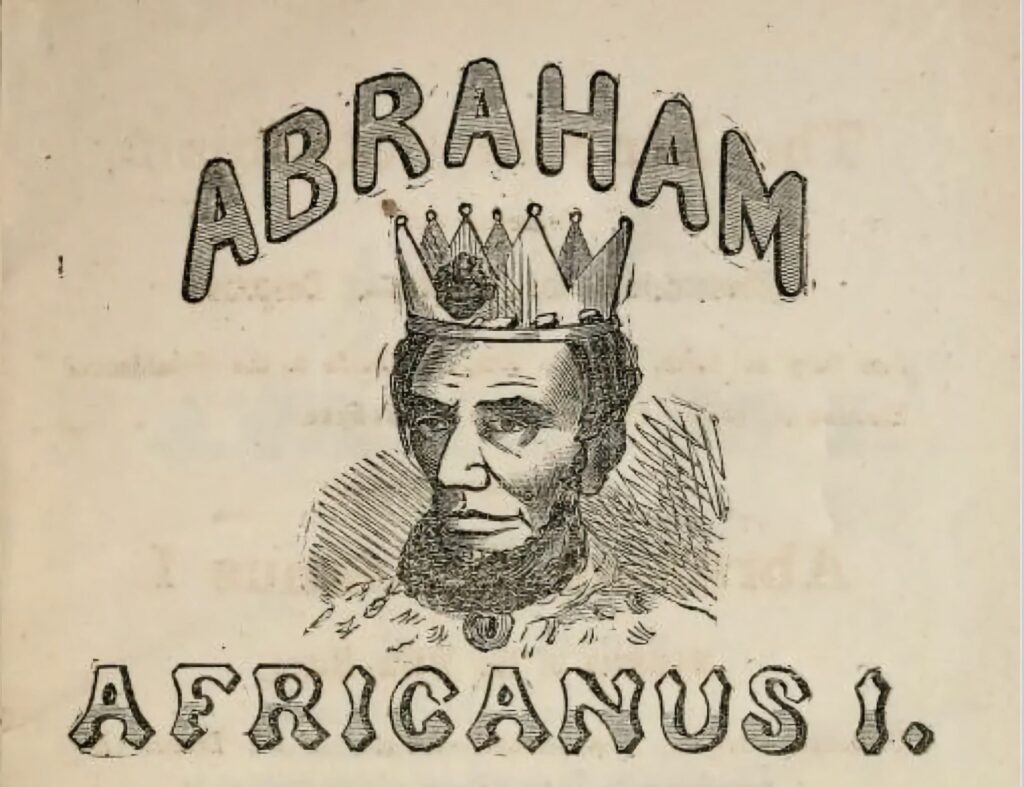
President Lincoln had indeed taken great liberties with his executive powers in his stated effort to preserve the liberties of the people. He shut down newspapers that were critical of him; suspended habeas corpus, ignoring an opinion of the Chief Justice of the Supreme Court that he had no lawful means to do so; dragged civilians before military tribunals; raised an army of 75,000 soldiers without congressional approval; allowed the creation of West Virginia as a Union state, contrary to the plain meaning of the Constitution;1 and selectively freed the slaves with the Emancipation Proclamation, which applied in rebel – but not Union – states.
Beginning from the premise that security will always tend to be the overriding priority of the citizenry, Hamilton puts it this way:
The violent destruction of life and property incident to war, the continual effort and alarm attendant on a state of continual danger, will compel nations the most attached to liberty to resort for repose and security to institutions which have a tendency to destroy their civil and political rights.
In other words, liberty and security exist in perpetual tension. When danger arises – especially from war, insurrection, or internal division – it is not liberty that citizens cling to, but security and authority. Even free people, the Framers thought, would willingly surrender their rights in exchange for protection; and the longer that danger endures, the more habitual becomes their willingness to surrender inalienable rights.
This point is exactly why the Founders believed a single grand Union was necessary for the preservation of liberty in the states, if not indeed across all of North America. Many separate confederacies would necessitate rapid militarization, with weaker governments having to compete with stronger ones. Drawing on European history, Hamilton foresaw a future where a divided America would need to resort to standing armies – a contentious point of debate at the Constitutional Convention.
The Founders feared that standing armies in peacetime would become tools of unrestrained executive power. As Hamilton alludes to in Federalist No. 8, the absolute monarchies of France and Spain developed powerful militaries out of necessity, in response to frequent wars and constant threats from neighbouring states. The need to manage the perpetual threat of conflict led to the concentration of executive power and the need to brook no dissent from their subjects. Were the Articles of Confederation to give way to multiple competing nations in America, Hamilton predicted there would inevitably be “established the same engines of despotism which have been the scourge of the Old World.”
Others at the Constitutional Convention observed that a federal government with no standing army would merely invite conflict by its apparent inability to defend itself against war or insurrection. The compromise reached between the camps, and defended by the authors of the Federalist Papers, granted Congress – not the executive – the power to raise and support armies, with the additional safeguard that military appropriations must be renewed every two years.2 Their intent was clear: to ensure civilian control and to guard against the emergence of a permanent military establishment, and with it, the risk of rule by executive decree.
When the South’s attack on Fort Sumter came in April 1861, Lincoln acted – decisively but unilaterally – to raise an army in defense of the Union. Under the Constitution’s compromise agreed at Philadelphia, Lincoln was required to seek congressional approval: it was Congress, not the President, that held the power to raise and support armies. But Lincoln ignored this constitutional safeguard against executive overreach. In a later message to Congress justifying his actions, he conceded the violation of the Constitution: “Whether strictly legal or not, [I] could but perform this duty or surrender the existence of the Government.” In other words, he claimed necessity where the Constitution had prescribed restraint.
War, as Hamilton warned, has precisely this effect. It gives rise to circumstances that seem to require the strengthening of the executive at the expense of the legislature – not just as a matter of strategy but one of perceived survival. Hamilton foresaw this exact scenario when he wrote that separate confederacies emerging from the Articles of Confederation following any rejection of the Constitution would “be necessitated to strengthen the executive arm of government, in doing which their constitutions would acquire a progressive direction toward monarchy. It is of the nature of war to increase the executive at the expense of the legislative authority.”
In bypassing Congress, Lincoln gave form to Hamilton’s fears. He began the slide down the slippery slope of not merely a temporary distortion of the balance of powers, but a full-on constitutional realignment. He claimed it was coerced – even justified – by war, and continued throughout his wartime presidency to claim greater and greater exceptional powers. History would seem to have vindicated him with the Union’s victory in the Civil War. And yet successive presidents have used Lincoln’s same justification to expand executive power at the expense of both the legislative oversight of Congress and the general liberties of the people.
With America’s entry into World War I, President Woodrow Wilson – champion of international law and order – bullied a compliant Congress into passing the Espionage Act of 1917 and the Sedition Act of 1918. Thousands were arrested for criticizing the government and its wartime policies, including journalists, union organizers, and political activists. Dissent became disloyalty in the land of the free and the home of the brave. Under Wilson, the war abroad became a justification for repression at home, and the executive – bolstered by fear and a sense of emergency – claimed powers that reshaped the boundaries of American liberty.
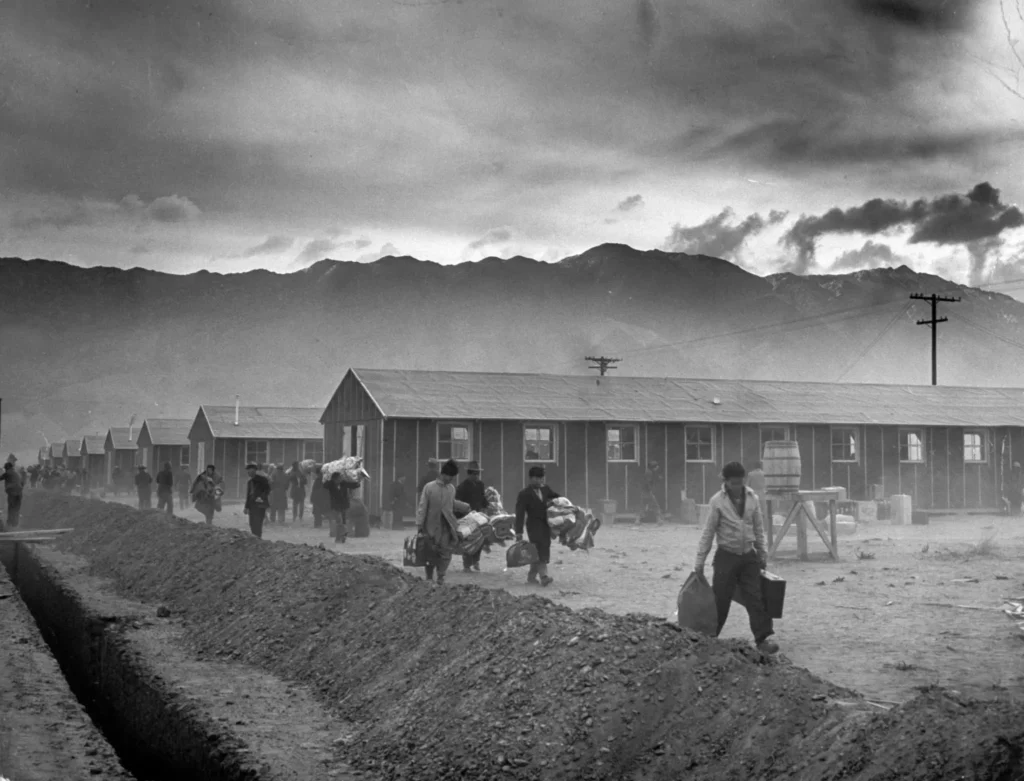
In a similar vein, following the Japanese attack on Pearl Harbour in 1941, President Franklin Delano Roosevelt issued Executive Order 9066, one that now lives in infamy. It established concentration camps that would ultimately confine 120,000 Japanese Americans – most of whom were citizens – without charge or trial. They were imprisoned not for what they had done but merely for what they might do. At the very same time, Roosevelt was championing his “Four Freedoms”: freedom of speech, freedom of worship, freedom from want, and freedom from fear. The contradictions would be difficult to reconcile except that Hamilton had already warned against them in Federalist No. 8: “it is difficult to prevail upon a people under such impressions [of military valour and necessity] to make bold or effectual resistance to usurpations supported by the military power.”
Nationalism was not yet a political concept in Hamilton’s time, but still he saw clearly the tendency of nations at war – or even perceived conflict – to place uncritical faith in executive authority. And the deeper and more immediate the sense of danger, the more readily liberty gives way. In the post-9/11 atmosphere of imminent terrorist attack, President George W. Bush declared an unending “War on Terror” as a justification for sweeping powers that vastly expanded executive authority at the expense of civil liberties. His administration built an expansive global network of CIA blacksites into which countless people were disappeared and tortured. Unprecedented powers of warrantless surveillance were codified under the Patriot Act, a hastily adopted piece of legislation that capitalized on the climate of fear to insinuate that any member of Congress who might stand against it was a traitor. It passed 98 to 1 in the Senate, with only Russ Feingold, Democrat of Wisconsin, voting against.
The trend toward authoritarian executive power in the United States is now reaching a crescendo under the second Trump Administration. Even before he was re-elected to the Presidency, Donald J. Trump made no secret of his intentions to use military power to subdue what he – and countless dictators before him – has referred to as “the enemy from within.” His rhetoric is not the language of constitutional republicanism but of factionalism and domestic war. What began with Lincoln as a reluctant claim of temporary necessity has evolved into a permanent posture of executive dominance. Trump now follows the logic of Federalist No. 8 as though it were a manual, not a warning. Fellow citizens who disagree with him – journalists, political activists, partisan adversaries – are not merely critics but threats to the nation’s very survival. L’État c’est lui.

Is this the Republic the Americans chose over the Crown? Did the Founders imagine a force of law that bends to fear, where absolute military power is invested in the whims of one man, where political opposition to the government of the day is considered treason? Hamilton was clear: the moment a nation begins to fear for its survival, it reaches not for law or liberty, but for the security of unchecked power.
“Give me liberty, or give me death!” declared Patrick Henry to the Virginia Assembly in 1775, invoking the sacred cause of freedom to justify armed rebellion against the Crown. Today, in the land that gave birth to that revolution, liberty has come to mean abject obedience – to the flag, to the party, to the very person of the President. No dissent is tolerated, no loyal opposition suffered, no allegiance accepted if it be not blind.
The great irony here is that the American Revolution was meant to overthrow the power of a “mad” and arbitrary King because of his dictatorial excesses over the North American colonies. And yet today George III’s heir and successor, His Majesty King Charles III, now reigns as a constitutional monarch, which is to say a head of state separate from the head of government, whose legitimacy derives not from popular will but from restraint, tradition, and the rule of law. His role and that of his own heirs and successors is to guarantee the continuity of a Westminster parliamentary democracy that enshrines free debate, the peaceful transition of power, and the constitutional right to disagree. Contrary to the spirit of the American Revolution, now it is the Republic – and the Grand Old Party of Lincoln – that would seem to demand submission and fealty to its leader.
Just as Hamilton foresaw, so too did the Copperheads – flawed though they were – recognize the danger: that liberty, once surrendered in fear, is seldom recovered. Sic semper rebus publicis – thus always to republics. ♛


Cover image: Official State Seal of Virginia, adopted at the outset of the Civil War and still in use today.
Footnotes
- Article IV, Section 3: “New States may be admitted by the Congress into this Union; but no new State shall be formed or erected within the Jurisdiction of any other State; nor any State be formed by the Junction of two or more States, or Parts of States, without the Consent of the Legislatures of the States concerned as well as of the Congress.”
- Article 1, Section 8, Clause 12: “The Congress shall have Power … To raise and support Armies, but no Appropriation of Money to that Use shall be for a longer Term than two Years.”