Loyalist № 10
To the Peoples of North America, this being a Loyalist Response to Federalist No. 74:
A
lexander Hamilton seems to have thought that the justification for the presidential pardon power was straightforward enough. Addressing himself to the Constitution’s Commander-in-Chief Clause,1 Hamilton in Federalist No. 74 summarizes the discussions and conclusions of the Framers on the issue of pardons in less than 800 words. Why is the pardon power needed at all? Because “without an easy access to exceptions in favor of unfortunate guilt, justice would wear a countenance too sanguinary and cruel.” Justice must be tempered by mercy, in other words.
Next, Hamilton considers who ought to wield that power of mercy. Hamilton acknowledges here, as he often does throughout the Federalist Papers, that groups are prone to punish dissenters and amplify the biases of their members: “men generally derive confidence from their numbers [and] often encourage each other in an act of obduracy.” Today we might characterize this tendency as groupthink. But a single individual who knows he will be held personally responsible for his decisions, Hamilton thinks, is more likely to grant pardons with care and deliberation. The reasoning closely resembles the justifications We have already explored in Our discussions on the nature of the executive as a unitary office rather than a plural one. That is to say, ownership of a decision is more easily attributable to a single office-holder than to many.
So, councils and legislatures are out. One wonders, perhaps, if Hamilton and the other Framers worried that pardons might become part of the routine horse-trading of legislative politics. It appears from Federalist No. 74 that the Convention at least briefly discussed the possibility of one or both chambers of Congress exercising, or else needing to concur with, the granting of pardons. In Hamilton’s view, this kind of legislative oversight would have been cumbersome, leading to delays in correcting injustices.
In principle, Hamilton and the other Framers proposed that the Constitution empower the President with what in the Westminster system – including Canada – is called the Royal Prerogative of Mercy. As Head of State, the monarch wields an absolute right to grant clemency in a wide variety of ways, including full pardons, conditional pardons, remission of sentences, and suspension of criminal records. Indeed, the Royal Prerogative of Mercy reaches back to the Crown’s historical role as the ultimate dispenser of justice, to a time before the establishment of formal courts. The Royal Prerogative of Mercy is a reserve power that the Crown has retained in order to address exceptional circumstances where the strict application of law through the courts results in an outcome that might “offend the King’s conscience.”
As is so often the case under Westminster constitutions, theory is little guide to practice. In reality, the Royal Prerogative of Mercy is highly regulated by constitutional convention, statute, and policy. Unlike the American pardon power, the Royal Prerogative of Mercy, while nominally exercised by the Crown in the person of the Governor-General, is enacted only on the advice of Cabinet. Typically the Minister of Public Safety makes a recommendation following a thorough review carried out by the vast machinery of government. The power is used sparingly and only in extraordinary cases that cannot be addressed through existing legislation. Only nine full pardons were granted in this way between 2010 and 2020, which underscores their rarity.
For Hamilton, however, the pardon power is needed for reasons that go beyond tempering harsh outcomes in the criminal justice system. He and the other Framers foresaw it being needed to maintain or restore the “tranquility of the commonwealth” – a calculation that could only be made by a Commander-in-Chief, hence the pardon power being included in the same clause that assigns ultimate military responsibility.2 And indeed it has been used more than once to attempt that very end, with mixed results.
When Vice-President Gerald Ford succeeded Richard Nixon in the wake of the Watergate scandal, he pardoned his former boss in an effort to lower the political temperature of the country at an exceptionally heated time. The embattled Nixon knew that if he were to stay in office he would be facing the first impeachment proceedings since President Andrew Johnson more than a century earlier. He also knew that criminal prosecution was likely to follow once he left office, whether voluntarily or upon conviction in the Senate. Ford’s ability to grant a pardon after he himself became President was surely a factor in easing Nixon from power. While the decision was controversial at the time, it has become more widely accepted in retrospect.
By contrast, President Andrew Johnson, after he was impeached but then acquitted in the Senate, issued mass pardons to the leaders of the Confederacy following the end of the Civil War. At the time, clemency toward the rebels may arguably have been in the spirit of his predecessor Lincoln’s Second Inaugural Address, in which he declared:
With malice toward none, with charity for all, with firmness in the right as God gives us to see the right, let us strive on to finish the work we are in, to bind up the nation’s wounds, to care for him who shall have borne the battle and for his widow and his orphan, to do all which may achieve and cherish a just and lasting peace among ourselves and with all nations.
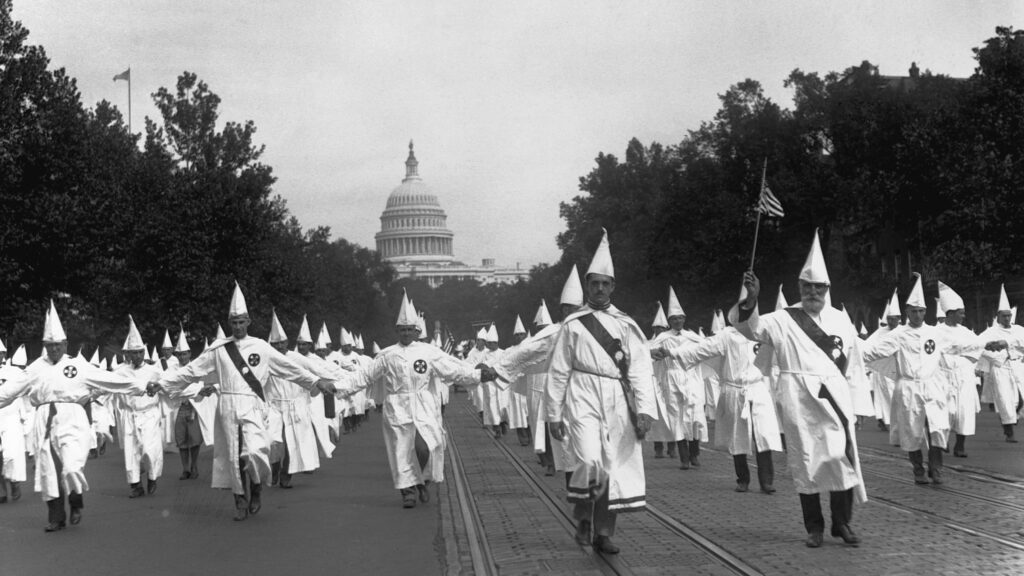
Others with a longer view of history, however, have argued more persuasively that Johnson’s pardons only undermined Lincoln’s original vision of Reconstruction – an America where freed slaves could own land, enjoy full citizenship, and vote. Instead, Johnson’s peace, so hard won by Lincoln’s Union army, laid the groundwork for Jim Crow, the Ku Klux Klan, the Great Migrations, and a much darker vision of America. The lingering injustices of the Civil War would not even begin to be addressed in any meaningful way until much, much later with the emergence of the Civil Rights Movement in the 1950s and 60s.

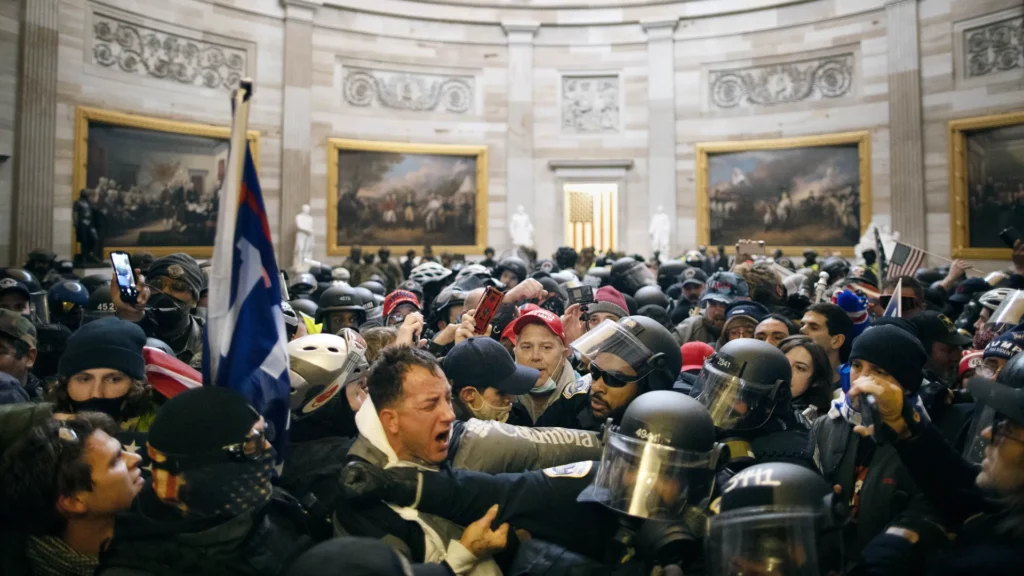
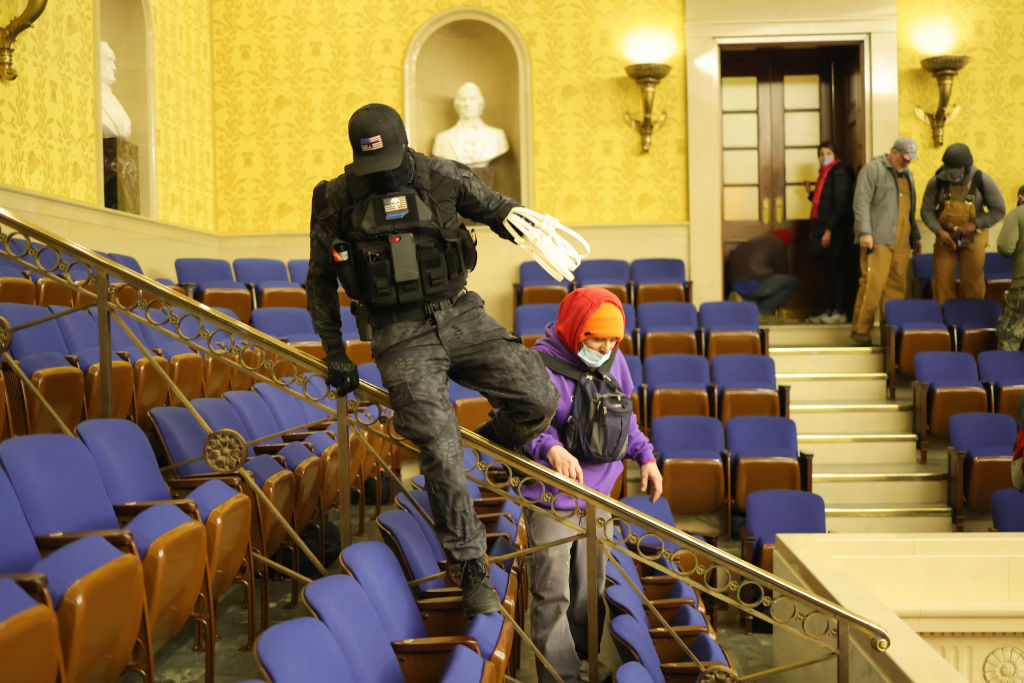
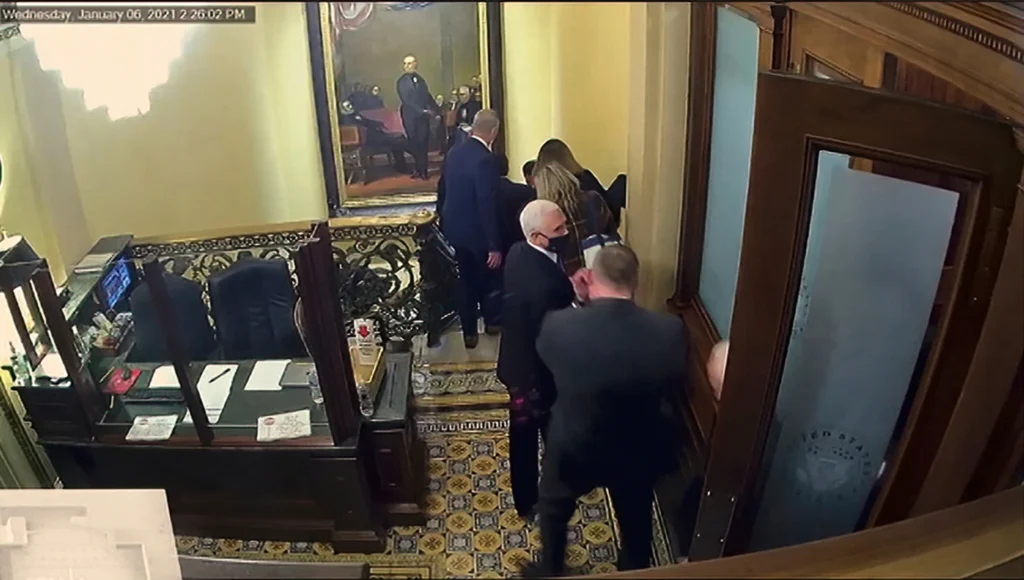
And then there’s the 47th President. On the very same day he returned to office, January 20, 2025, Donald Trump granted pardons to nearly 1,600 people who had been convicted of crimes during the storming of the Capitol on January 6, 2021. At a stroke, members of far-right groups who had been convicted of crimes as serious as seditious conspiracy were released from prison well short of their full sentences – in some cases many years short. Their leaders have neither demonstrated remorse nor renounced the antidemocratic ideals that motivated their actions.
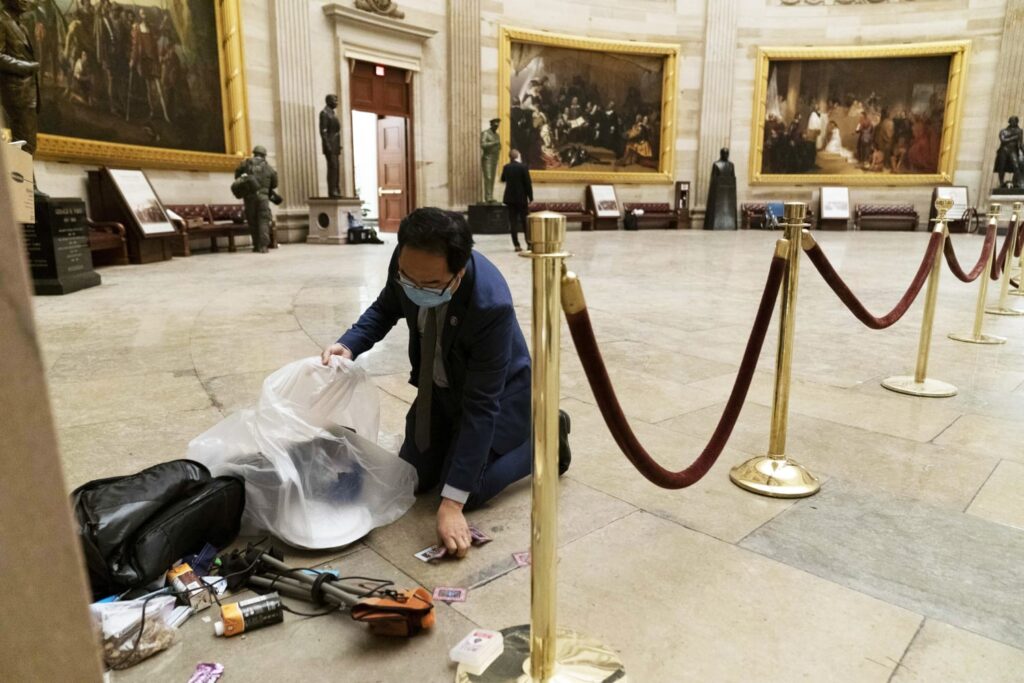
Consider this: Not since the end of the Civil War has a President used the pardon power on such a scale. And whereas other Presidents have tended to leave pardons to their final days in office, Trump in his second term chose to make it a Day One priority. Hamilton had words of warning for this potential use of the Commander-in-Chief Clause:
A proceeding of this kind, out of the usual course, would be likely to be construed into an argument of timidity or of weakness, and would have a tendency to embolden guilt.
— Alexander Hamilton, speaking of the risks of overusing the presidential pardon power, 1788.
In other words, overuse of the pardon power would undermine confidence in both the justice system and the pardon power itself, leading to a culture of impunity. Rather than serving the ends of peace and tranquility, it would only embolden those with criminal – even seditious – designs. (The Ku Klux Klan is one of several examples that could be cited here.) Indeed, that may well have been Trump’s intent as he begins what under the 22nd Amendment is to be his final term in office.
The newly-inaugurated President’s sweeping executive action undid years of painstaking work by the Department of Justice in prosecuting those who had engaged in an insurrection against the government of the United States, one that threatened the lives of law-makers from both parties; injured more than 140 police officers, some of whom died as a result; and disrupted the peaceful transfer of presidential power for the first time in the entire 235-year history of the Republic. And all of it happened at the behest of a sitting President who had failed to win re-election.
Hamilton saw the pardon power as an essential release valve to restore peace and order, to be used if and when it was needed, calling it a “benign prerogative.” The Framers were confident in the original vision of the Electoral College to elevate wise elder statesmen to the presidency. They could not fathom a Commander-in-Chief so willingly and wilfully weakening his own office. And perhaps that is why they never imagined that the pardon power could be used to undermine the rule of law and the Constitution’s carefully calibrated balance of powers, to stoke factionalism and division, to destabilize the commonwealth and let loose upon the Republic enemies of liberty and justice – nay, to offend the very conscience of the nation.
In the hands of one who wears not the Crown but lusts after it, the noble prerogatives of mercy and pardon turn to malignancy. Not unlike the failure of Reconstruction following the end of the Civil War, the pardoning of the January 6th insurrectionists who sought to overturn the legitimate and lawful democratic order of the United States foreshadows a long and terrible night ahead. ♛


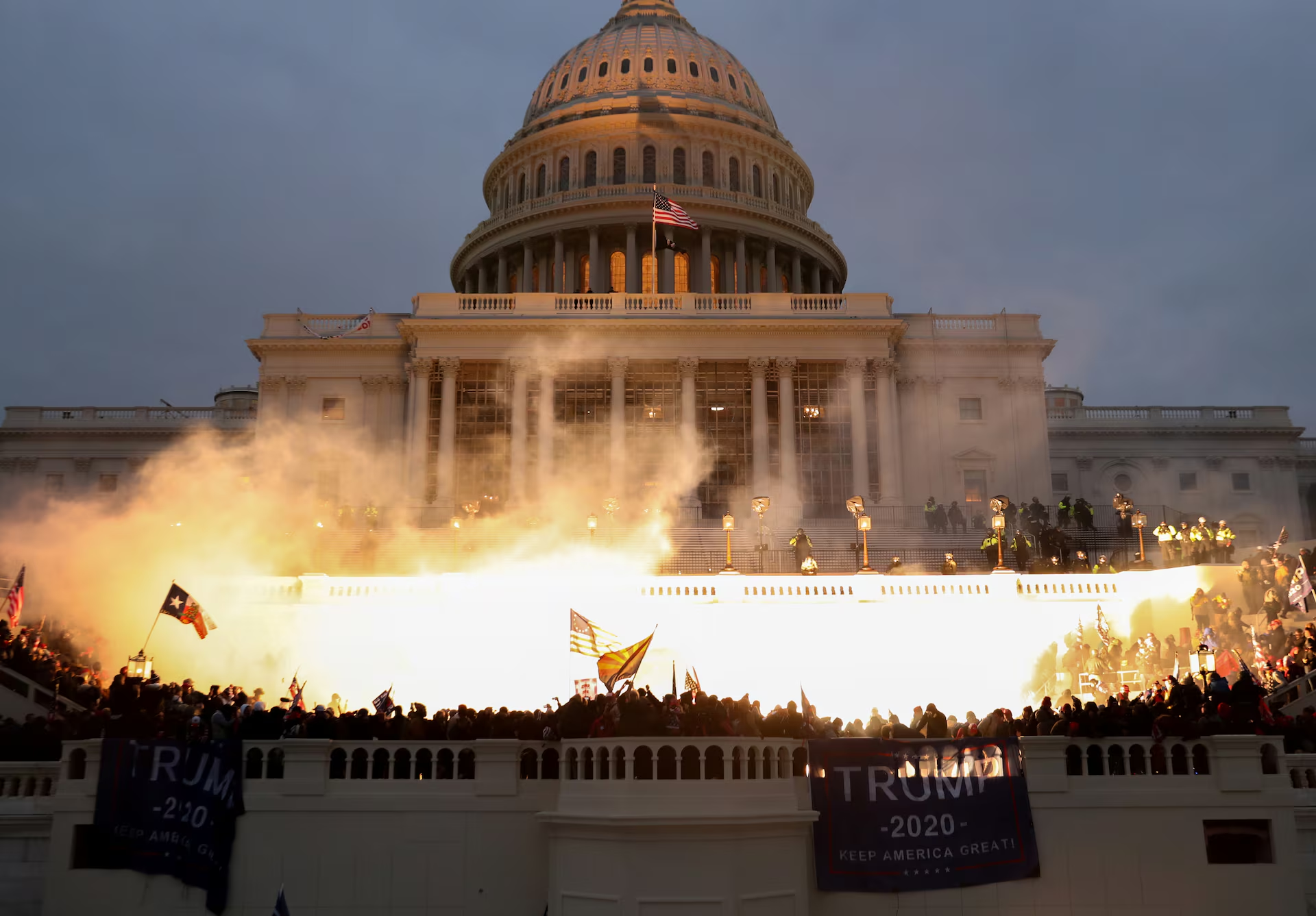
Cover image: An explosion from a police munition illuminating the U.S. Capitol during the January 6, 2021 riot. Photo by Leah Millis (2021). Courtesy of Reuters. // Its proceedings having been derailed, Congress reconvened the following day and certified the results of the 2020 election, formalizing Joe Biden’s accession to the Presidency.
Footnotes
- Article II, Section 2, Clause 1: “The President shall be Commander in Chief of the Army and Navy of the United States, and of the Militia of the several States, when called into the actual Service of the United States; he may require the Opinion, in writing, of the principal Officer in each of the executive Departments, upon any Subject relating to the Duties of their respective Offices, and he shall have Power to grant Reprieves and Pardons for Offences against the United States, except in Cases of Impeachment.”
- In Federalist No. 74 Hamilton quickly dismisses discussion of the martial aspects of the clause as an obvious necessity, requiring little to no discussion. He then moves on immediately to the pardon powers.