Loyalist № 21
To the Peoples of North America, this being a Loyalist Response to Federalist No. 23:
B
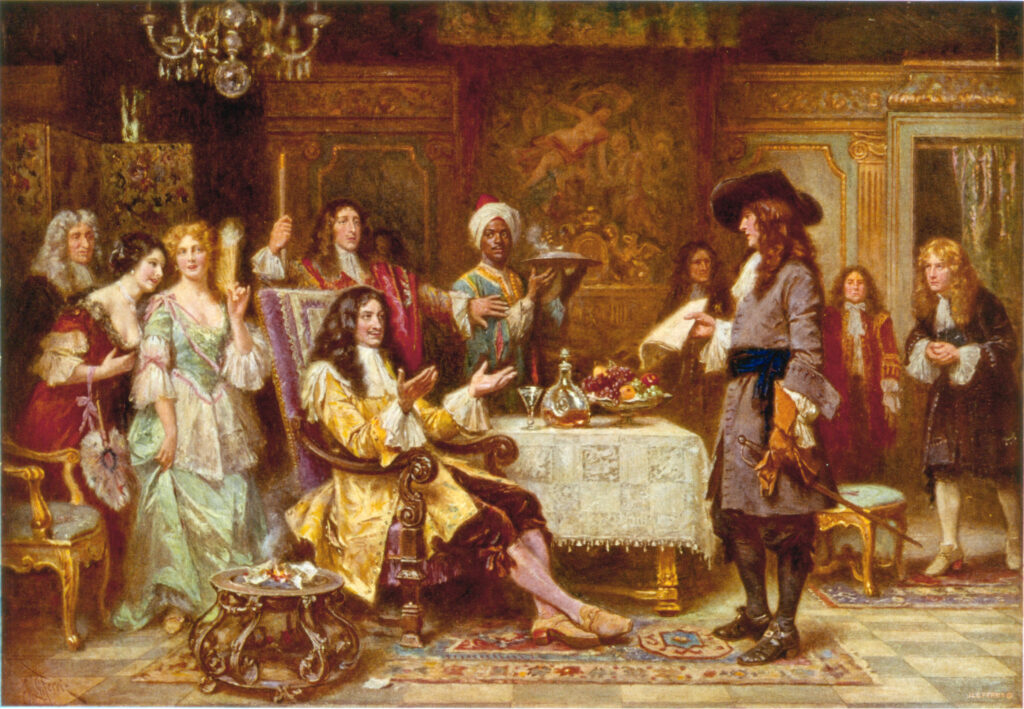
enjamin Franklin is often quoted as having said, “Those who would give up essential Liberty, to purchase a little temporary Safety, deserve neither Liberty nor Safety.” His words are widely taken to mean that individual freedom is incompatible with an all-powerful state that would promise protection from danger at home and abroad. In fact, Franklin was writing on behalf of the Pennsylvania Assembly in reply to a 1755 dispute with the Colonial Governor over – what else? – the powers of taxation.
It was the beginning of the French and Indian War. The Governor wanted to raise funds for the defence of the colony, but was unwilling to sign any bill that failed to exempt the wealthy Penn family, for whom the colony was named. The legislature held that it was their “essential Liberty” to determine taxation policies.
In response to the deadlock between the Governor and the Assembly, the Penn family offered a lump sum of money to defend against the Indigenous attacks on the colony’s western flank, provided the legislature would exempt them from future taxation. The “temporary Safety” promised was the circumvention of the legislature’s authority in what some considered to be extenuating circumstances. Franklin considered it to be a bribe.
How surprising, then, that Hamilton should seem to argue the Colonial Governor’s side in Federalist No. 23. “The circumstances that endanger the safety of nations are infinite,” he writes, “and for this reason, no constitutional shackles can wisely be imposed on the power to which the care of it is committed.” Gone in this Paper are the famed checks and balances, replaced with jarring talk of powers that “ought to exist without limitation”, the protection of “NATIONAL INTERESTS” against “internal convulsions [and] external attacks”, and the vital role of the federal government “as that body to which the guardianship of public safety is confided.”
A charitable reading of Hamilton’s argument might put it this way: republics like the young United States were the rare exception in a dangerous world dominated by monarchical, even despotic, powers.1 In this context, defence of the Revolution’s hard-won liberty requires an energetic government that is able to act swiftly in the face of such dangers. Since the scope and scale of those dangers cannot be defined, and “the means ought to be proportioned to the end,” the federal government must not be restrained in its ability to project power.
How are We to reconcile these two positions – the conception of a limited government that must wield unlimited power? In Federalist No. 23, Hamilton seems to have in mind that the power of the federal government will need to be “proportioned” to the threat posed by the imperial powers, who were themselves largely unrestrained. By this reading, unlimited power projected against enemies abroad guarantees limited government at home.
Yet this interpretation, too, fails on two counts. First, Hamilton in the very same Paper specifically notes the threat of “internal convulsions” against which the federal government must defend. Second, he also expends not an insignificant amount of ink arguing that rectifying the failures of the Articles of Confederation means that “we must extend the laws of the federal government to the individual citizens of America.” Both foreign nations and American citizens are, it would seem, equally to be subject to the federal government’s power.
We might be more charitable still to Hamilton by borrowing a famous phrase, used much later, by Supreme Court Justice Robert Jackson. One of the founders of modern international law, Jackson led the prosecution of high-ranking Nazis at Nuremberg for crimes of aggression and crimes against humanity; many in the docket were also responsible for the overthrow of the Weimar Republic. Perhaps thinking back to this odious group in a 1949 dissent,2 Justice Jackson warned,
There is danger that, if the Court does not temper its doctrinaire logic with a little practical wisdom, it will convert the constitutional Bill of Rights into a suicide pact.
—Justice Robert Jackson, 1949
Jackson was echoing the same position Lincoln asserted following the outbreak of the Civil War. At a time of national crisis, Lincoln suspended the ancient writ of habeas corpus in his efforts to preserve the Union from the kind of “internal convulsions” Hamilton may have had in mind when he was writing in 1787. Lincoln also raised an army without Congressional approval, in violation of a plain reading of the Constitution. Seventy-three years after the ratification of the Constitution, the necessary evil of a military establishment that was meant to guard against threats from abroad had come to be turned against fellow Americans at home.
Pleading with his countrymen to maintain the same sense of unity they had forged in the Revolution, President George Washington, in his 1796 Farewell Address, wrote:
The alternate domination of one faction over another, sharpened by the spirit of revenge natural to party dissension, which in different ages and countries has perpetrated the most horrid enormities, is itself a frightful despotism. But this leads at length to a more formal and permanent despotism. The disorders and misery which result gradually incline the minds of men to security and repose in the absolute power of an individual.
—President George Washington, 1796
For Washington – the only person ever to be elevated to the Presidency in the nonpartisan manner originally envisioned by the electoral college – division at home posed an inherent risk to the republican form of government. Foreign powers would be able to exploit these divisions for their own benefit. This is why Washington warned against “foreign entanglements” that might pit one faction against another: they would inevitably lead, out of expediency, to an imperial Presidency.
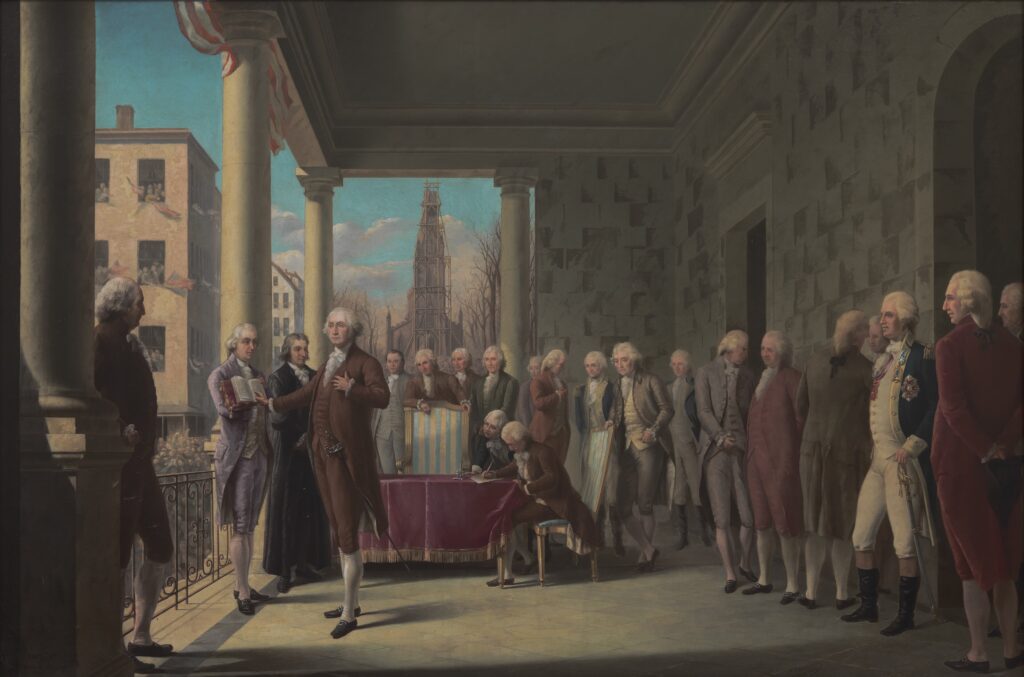
Here Hamilton and Washington seem to be at odds. For Hamilton, keeping foreign influence at bay – and therefore maintaining a sense of national unity – required a strong and energetic federal government that would be unbounded in international affairs. For Washington, national unity had to come first or else the projection of power abroad would necessarily give rise to “overgrown military establishments which, under any form of government, are inauspicious to liberty, and which are to be regarded as particularly hostile to Republican liberty.”
In other words, contrary to Hamilton, Washington saw the projection of unlimited power abroad as essentially incompatible with limited government at home. What is puzzling about the two positions is that Washington’s words were drafted with the assistance of both Hamilton, the architect of the energetic state and pragmatic supporter of a standing army, and Madison, the champion of limited government and forewarner of factionalism. Was Hamilton’s original position in Federalist No. 23, written in 1787, a work of political salesmanship to ensure passage of the Constitution? Or did his own experience serving in Washington’s administration lead him, by 1796, to change his mind about the way federal power ought to be projected abroad?
There are many layers of historical irony here. For one, Hamilton and Madison – compatriots in the writing of the Federalist Papers – were, soon after Washington’s departure, themselves “sharpened by the spirit of revenge” and went on to become founders of rival political parties. For another, in that very same address to the American people, Washington argues that “experience is the surest standard by which to test the real tendency of the existing constitution of a country.” This is, of course, a precept not of American revolutionary democracy, written on a tabula rasa, but of Westminster parliamentary gradualism.
Weary from years of war and the weight of the Presidency, Washington wondered aloud in his Farewell Address about the prospects of success for the American “experiment”:
Can it be, that Providence has not connected the permanent felicity of a nation with its virtue? The experiment, at least, is recommended by every sentiment which ennobles human nature. Alas! is it rendered impossible by its vices?
—President George Washington, 1796
Riding high on the energy of the Enlightenment, the American revolutionaries imagined that they could rebuild their world anew by casting off what they considered the shackles of empire and founding a republic on political rationalism. In doing so, the Founders also rejected hundreds of years of institutionalized political virtue – Washington’s own “standard of experience” – that might otherwise have been inherited from the Mother Country.
Our loyal Dominion of Canada later went on to inherit much of that treasure trove of experience when We adopted a constitution “similar in principle to that of the United Kingdom.”3 The British Constitution did not emerge from a single convention like the one held at Philadelphia; rather, it emerged organically through centuries of storm and strife between the Crown, the Lords, and the Commons. Beginning from the absolute rule of the Norman Kings, the forge of experience steadily reduced the unlimited powers of the Crown through hard-won customs, conventions, and traditions.
Centuries of political experience reduced the scope of the Crown’s executive power in favour of an empowered Parliament. Magna Carta in 1215 brought the reign of King John under the rule of law and established the principle of due process that would later evolve into the right of habeas corpus. The fourteenth century saw Parliament claim the power of the purse from the hands of Edward III. The 1628 Petition of Right established the principle that taxes could not be levied without the consent of Parliament, while the military dictatorship of Oliver Cromwell under the Commonwealth of England made clear the need for strong parliamentary oversight of the army – two clear preoccupations of the Founders. Ultimately the Glorious Revolution and the English Bill of Rights established the supremacy of Parliament over the Crown.
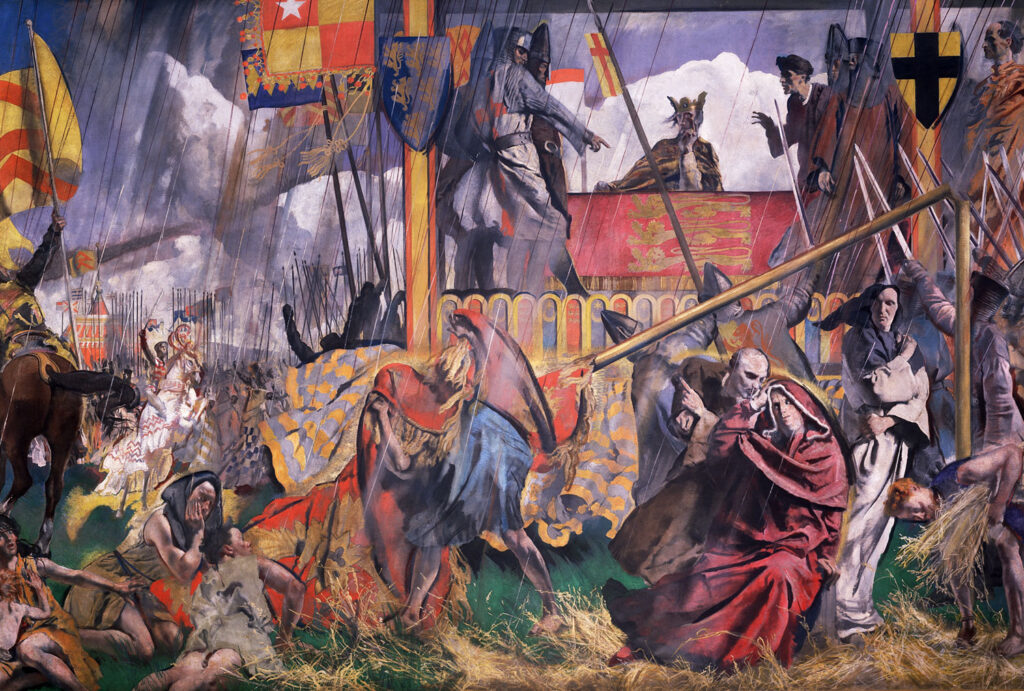
At each step, a wide scope of Royal powers was gradually narrowed without breaking the English Constitution, largely because of its unwritten nature. In that process, the “felicity” of England, to borrow from Washington, became deeply connected with its “virtue”. So when Hamilton argues in Federalist No. 23 that the threats facing nations, whether internal or external, are “infinite” and unpredictable, he seems wilfully to overlook the long catalogue of conflict out of which British parliamentary democracy emerged. Yet it is this very time-tested experience that the American “experiment” rejected in favour of a Constitution written on a blank slate that established fundamental rights as a matter of decree.
Perhaps the only way to resolve the contradictions in Federalist No. 23 is to view them as a reflection of America’s own founding: that is to say, as a deliberate act of forgetting. After all, the seemingly arcane customs, conventions, and traditions of Westminster democracy are, in their essence, a manifestation of a collective memory of everything that ever failed to work in governing a free people.4 The American revolutionaries chose to reject these lessons borne of experience out of confidence in their own ability to distill, through reason alone, the principles of good government and then to write them down on parchment.
The actual experience of American democracy reveals a final irony in this regard. Rather than limiting the powers of the federal government and, in particular, the Presidency, over time the Constitution’s unenumerated powers and unanticipated exigencies have led successive presidents to amass more power than perhaps the Founders might ever have imagined.5 And they have done so in what is now a fundamentally partisan office, one that is wrenched every quadrennial election cycle between the descendants of Hamilton’s and Madison’s factious political heirs.6

What, then, of the federal government and Hamilton’s confidence in its “guardianship of public safety”?
Beginning in December 2025 and intensifying into the new year, federal paramilitary agents of Immigration and Customs Enforcement (ICE) were deployed throughout the State of Minnesota in what was called Operation Metro Surge. Ostensibly charged with enforcing federal immigration law, ICE wreaked havoc on American streets – intimidating protesters, breaching court orders, raiding workplaces without warrants, and arresting citizens and foreigners alike. Two law-abiding Americans were shot and killed by ICE, only then to be vilified as “terrorists” by the Administration contrary to the plain evidence. These agents had, in a word, cast off Hamilton’s “constitutional shackles” in pursuit of safety at home against (perceived) threats from abroad.

All officers of the federal government, including ICE agents, must swear allegiance to the Constitution of the United States before they are lawfully empowered to execute the duties of their office.7 Tellingly, that oath has evolved over time. In Washington’s era, it was sufficient simply to state that one would “support the Constitution of the United States.” In Lincoln’s time, Congress saw fit to add clauses about bearing “true faith and allegiance” and defending against “enemies foreign and domestic.”8 Today, these two clauses remain part of the Oath of Office. It also now traditionally ends with “so help me God.”9
Benjamin Franklin’s famous phrase about balancing liberty and safety, now so often taken out of its original context relating to a dispute over taxation powers, is also widely thought to end with a warning: that those who would trade one for the other will “soon lose both.” The historical record shows this to be apocryphal, but experience has elevated it to a truism. And perhaps that is why it has stuck. Leaving the Constitutional Convention, Franklin is also said to have described the new American form of government as “a republic, if you can keep it.”
The experience of constitutional monarchy is fundamentally different. Steeped as he was in the long and venerable tradition of Westminster democracy, Sir John A. Macdonald, a Scottish immigrant, may well have left the Charlottetown Conference in 1867 – two years after the American Civil War – describing the new Dominion of Canada as “a constitutional monarchy, if you can remember it.” Whether he actually said those words, they are in any case a true reflection of a distinctly Canadian experience. Lest We forget. ♛


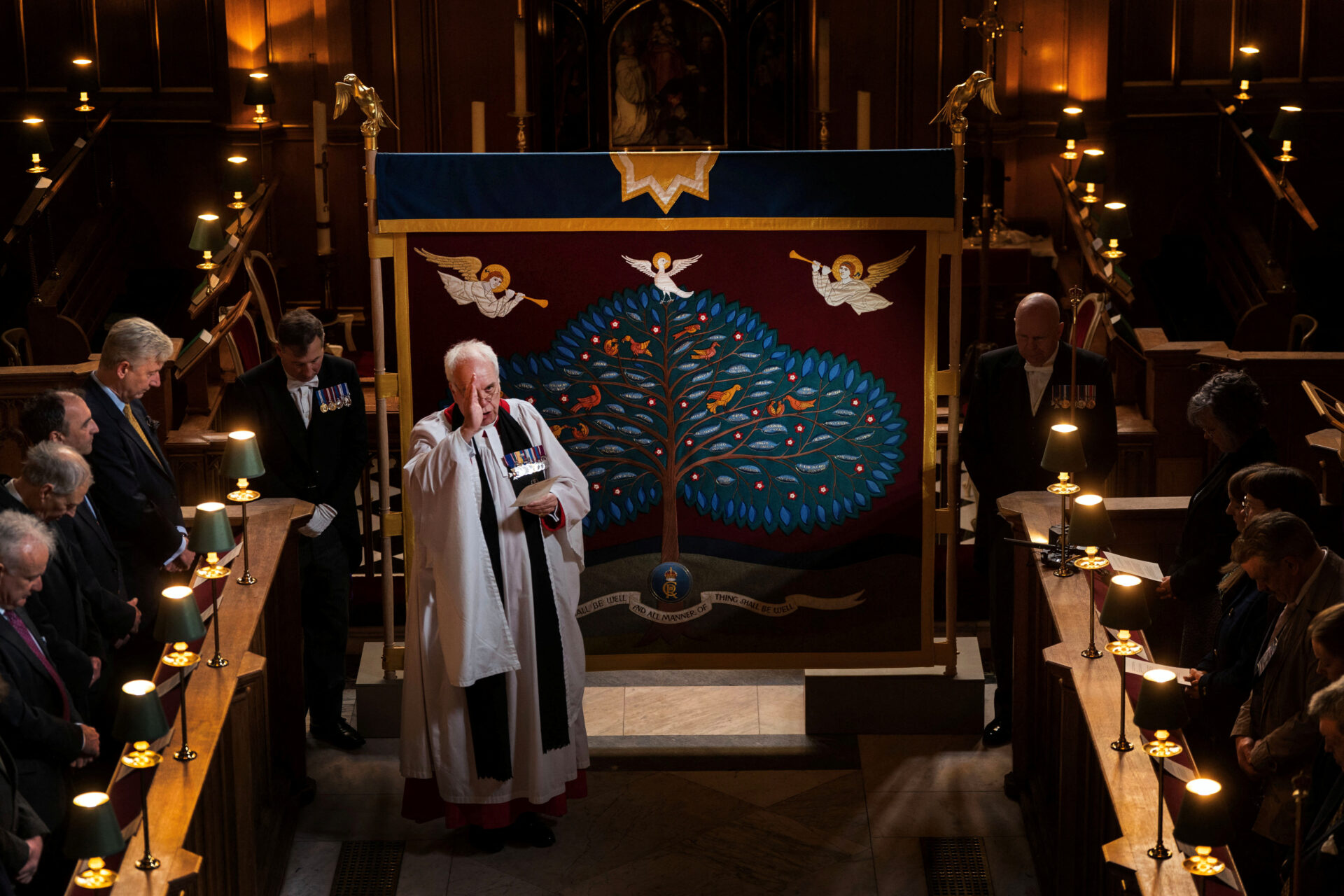
Cover image: The Blessing of the anointing screen ahead of the coronation of His Majesty King Charles III. The sacred act of the Unction at the coronation, conducted behind the screen, remains the most ancient and mysterious rites of the British monarchy. Hand-stitched into the leaves of the tree are the names of all 56 member states of the Commonwealth, including Canada. // Courtesy of the Royal Family.
Footnotes
- In fact Hamilton makes this argument more directly in Federalist No. 24, seemingly in contradiction to his line of reasoning in Federalist Nos. 1 and 2 that the drafting of the United States Constitution took place during a singular time of peace that allowed for rational debate about the nature of political power.
- Terminiello v. City of Chicago (1949).
- Preamble to the Constitution Act, 1867.
- Rising from the Opposition benches in the House of Commons on November 11, 1947, Winston Churchill captured the spirit of Westminster gradualism by saying, “Many forms of Government have been tried, and will be tried in this world of sin and woe. No one pretends that democracy is perfect or all-wise. Indeed it has been said that democracy is the worst form of Government except for all those other forms that have been tried from time to time.”
- See Loyalist No. 11.
- See Loyalist No. 7.
- Article IV, Clause 3: “… all executive and judicial Officers, both of the United States and of the several States, shall be bound by Oath or Affirmation, to support this Constitution…”
- This revised version from 1863, called the Ironclad Oath, was far more extensive than originally provided in the Constitution. In fact, it more closely resembled those that were mandated under England’s late seventeenth-century Test Acts. (Religious tests, however, are banned under Article IV.)
- The full oath reads: “I do solemnly swear (or affirm) that I will support and defend the Constitution of the United States against all enemies, foreign and domestic; that I will bear true faith and allegiance to the same; that I take this obligation freely, without any mental reservation or purpose of evasion; and that I will well and faithfully discharge the duties of the office on which I am about to enter. So help me God.”