Loyalist № 15
To the Peoples of North America, this being a Loyalist Response to Federalist No. 26:
P
ride came before the fall. On December 6, 1648, Colonel Thomas Pride of the New Model Army marched his regiment onto the grounds of the Palace of Westminster. His soldiers took up positions at the porch of St. Stephen’s Chapel – the meeting place of the House of Commons at the time – ready to bar from the chamber any Member thought still to be loyal to the King.
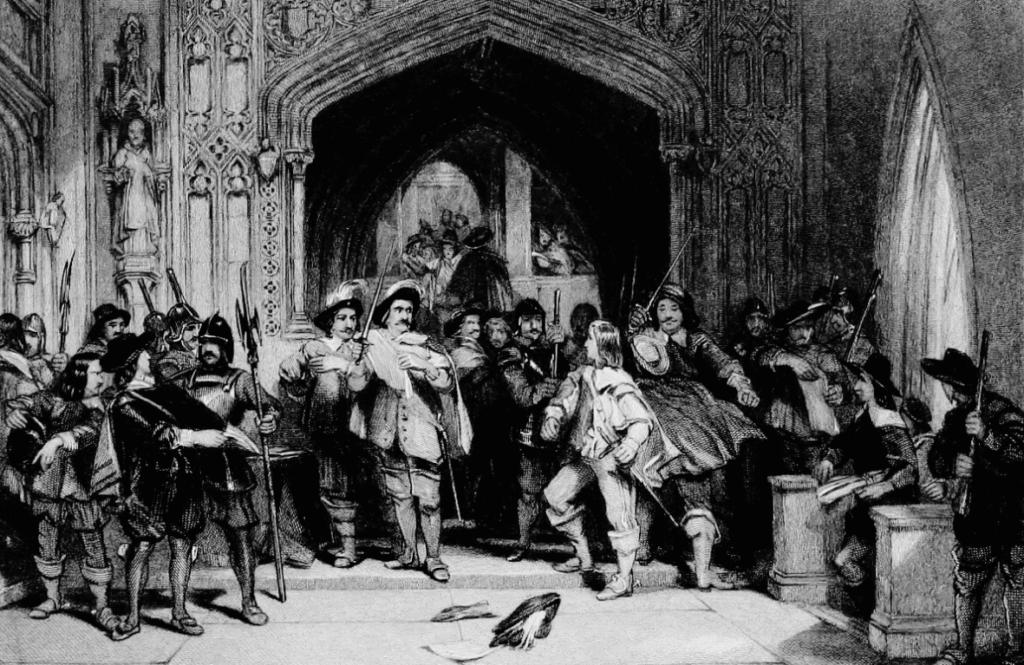
His Majesty King Charles I had been under arrest for two and a half years during the uneasy interlude between what historians would later call the First and Second English Civil Wars. At stake was the nature of the political balance between the Crown and the Commons. The First Civil War was fought to decide questions as wide ranging as powers of taxation and the right to raise armies. But it ended in a stalemate in 1646 with the capture of the King, who, even then, refused to make concessions. The Second Civil War was soon to begin.
The previous night, December 5, a clear majority of MPs had voted to proceed with terms of settlement that had been negotiated by Parliamentary Commissioners and the King at Newport, on the Isle of Wight. The so-called Treaty of Newport would have restored Charles I to the throne while at the same time transferring some of His executive powers to Parliament. Most importantly, Parliament was to assume exclusive authority over the Kingdom’s military power, but only for a period of twenty years.
To those in the Army, the proposed settlement was a betrayal of the blood they had spilt for the Parliamentary cause against a King who had conspired with Scottish and Irish forces to attack His Own English subjects during the First War.1 It also raised the prospect that England’s military power – including the New Model Army itself – might eventually revert to the command of a Crown they could no longer trust. There were similar anxieties that Parliament might see no need for a standing army in peacetime and decide to disband it. For many of the Army’s senior commanders, including a man named Oliver Cromwell, nothing short of the total abolition of the monarchy would do.
And so, on the morning of December 6, Pride’s regiment barred more than a hundred MPs from the House of Commons and arrested dozens more. Having removed the moderate majority, Pride’s Purge reduced the Commons to a compliant, Army-aligned remnant called the Rump Parliament. In the days that followed, the radicalized legislative body abandoned the terms of the Treaty of Newport and moved to put the King on trial. A hastily constituted High Court of Justice convened at Westminster Hall in January 1649, found Charles I guilty of treason, and sentenced him to death.
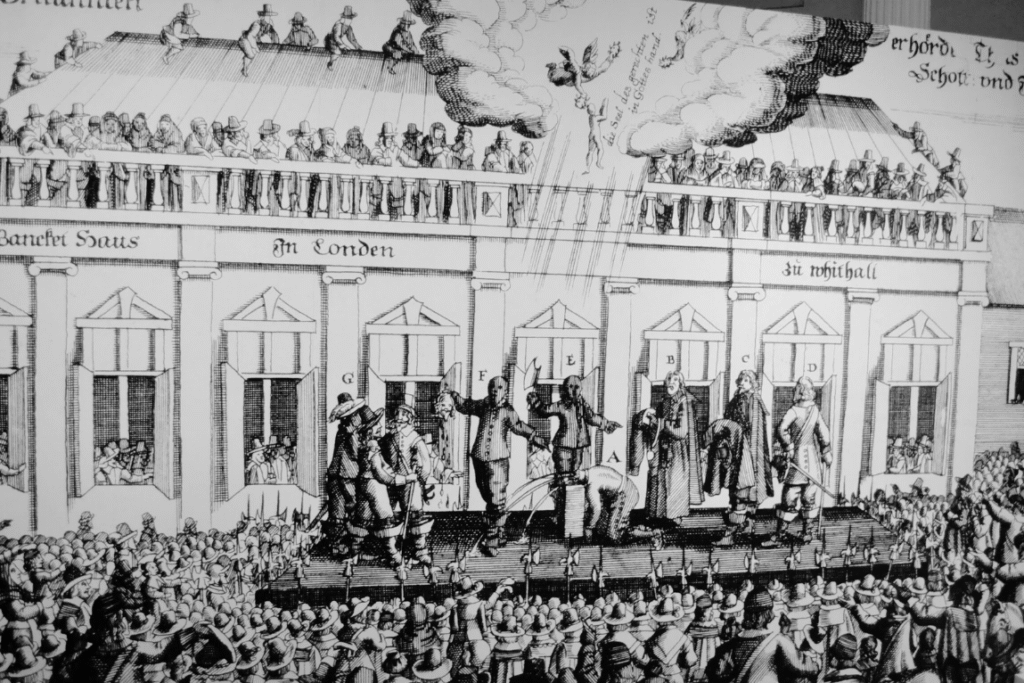
On a cold and gloomy day in late January, Charles Stuart was marched up the scaffold outside Whitehall Palace, the centre of English state power, and was beheaded. Philip Henry, a mere 17-year-old boy, watched from the crowd. Later he wrote in his diary,
I stood amongst the crowds in the street before Whitehall gate, where the scaffold was erected, and saw what was done, but was not so near as to hear anything. The blow I saw given, and can truly say with a sad heart. At the instant whereof, I remember well, there was such a groan by the thousands then present as I never heard before and desire I may never hear again.

The New Model Army is precisely the kind of example that many critics of the U.S. Constitution feared. Whether standing armies should be banned outright in peacetime was a significant point of contention at the Constitutional Convention.
Alexander Hamilton takes up that question in Federalist No. 26, noting that at least two state constitutions – those of Pennsylvania and North Carolina – included explicit bans on standing armies without the consent of the legislature, while several others had declarations that standing armies ought not to be raised. In all of these cases, however, the legislature was already empowered to raise armies at its sole discretion. For this reason, Hamilton argues that these provisions simply “cease to operate the moment there is an inclination to disregard [them].”
Any ban on raising standing armies in the U.S. Constitution, then, would be both absurd and ineffective – and potentially dangerous in its risk of lulling the citizenry into a false sense of security. Hamilton attributes his compatriots’ desire to prohibit standing armies in peacetime to “a zeal for liberty more ardent than enlightened.” In other words, he sees it as a misguided borrowing of British “habits of thinking” in the very different circumstances of Revolutionary America.
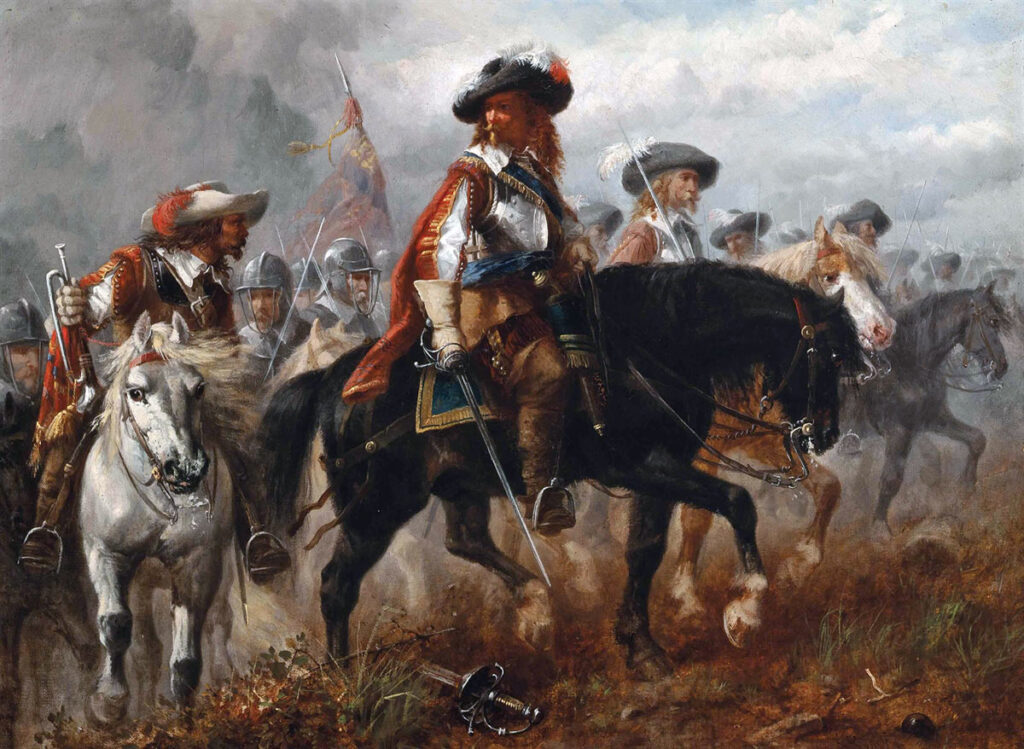
In one of his lengthier meanderings through English constitutional history, Hamilton observes that Kings Charles II and James II both maintained standing armies as large as thirty thousand troops, paid for through their civil list, i.e. regular moneys paid to them by Parliament and/or profits from their own personal holdings. It was not until the Glorious Revolution in 1688 and the adoption of the English Bill of Rights that the power to raise and maintain armies was fully transferred to Parliament. While the monarch retained his or her position as Commander-in-Chief, military power was ultimately made accountable to Parliament, which, then as now, holds the purse strings.
In this exposition, Hamilton is arguing that the historical power struggles between the monarch and Parliament, between executive authority and legislative oversight, are in his time being misapplied by a revolutionary people to their own elected representatives. Hence the self-defeating admonitions against standing armies that had been enshrined in state constitutions and the desire to incorporate the same principle into the federal constitution as well. He summarizes:
The principles which had taught us to be jealous of the power of an hereditary monarch were by injudicious excess extended to the representatives of the people in their popular assemblies. … The reason which had introduced a similar provision into the English Bill of Rights is not applicable to any of the State constitutions.
Rather than arguing for a simple adoption of existing tradition, Hamilton leans into the foundational idea introduced in Federalist No. 1 of Revolutionary America having been seized of a moment, unique in all of human history, to establish “good government from reflection and choice … uninfluenced and unbiased by considerations foreign to the public good.” On this basis, Hamilton defends the compromise reached at Philadelphia that Congress be empowered to raise armies at any time, but must revisit the question at least once every election cycle.2
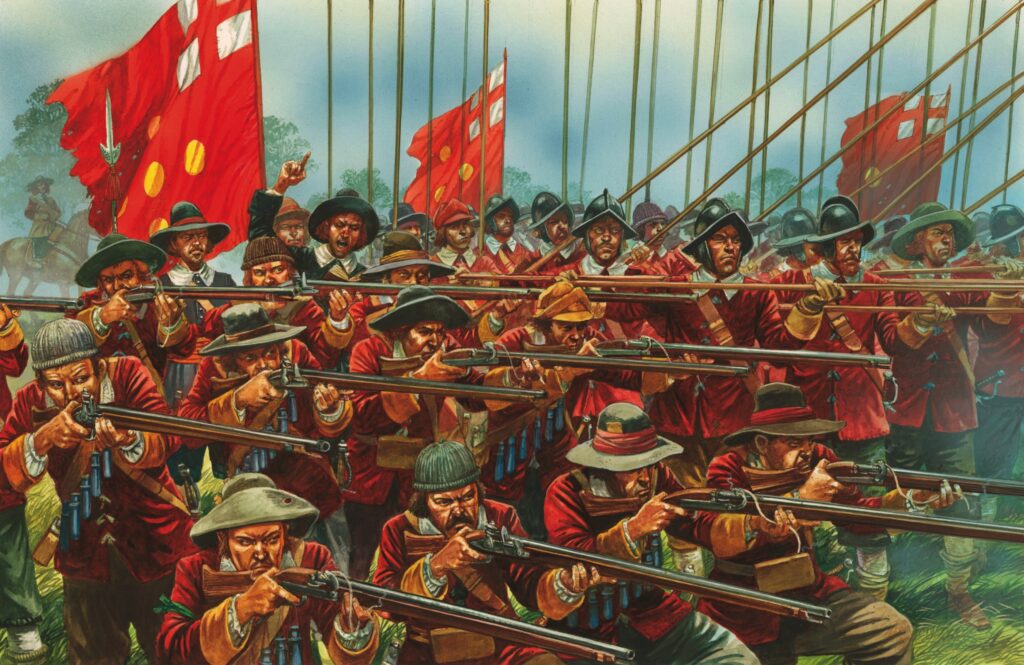
The Framers thought that forcing the debate every two years would lead to careful scrutiny of the military establishment, holding it fast to Congressional oversight and preventing it becoming an independent political actor akin to the three branches of government. In one of the rare passages of the Federalist Papers where partisanship is even countenanced at all, Hamilton concedes that “the spirit of party … must be expected to infect all political bodies.” But this, he argues, plays to the benefit of the Republic:
As often as the question comes forward, the public attention will be roused and attracted to the subject, by the party in opposition; and if the majority should be really disposed to exceed the proper limits, the community will be warned of the danger, and will have an opportunity of taking measures to guard against it.
Even today, Congress regularly votes on the question of whether to maintain or disband the United States Army, as required by the Constitution. But contrary to Hamilton’s expectation, such motions rarely elicit much – if any – debate, and even less interest or attention from the public.
There is a great irony in America’s constitutional debate on standing armies and the compromise reached at Philadelphia: the result was virtually the same as the English reached in the Glorious Revolution, cited more than once in Federalist No. 26. Hamilton quotes from the English Bill of Rights: “That the raising or keeping a standing army within the kingdom in time of peace, unless it be with consent of Parliament, is against law.”
From the Glorious Revolution onward, Parliament has not only given its consent but has established its authority over the military by passing annual Mutiny Acts to regulate discipline and prevent the army from becoming a law unto itself, as Cromwell’s New Model Army had once done. Today, that tradition continues in modern form through the Armed Forces Act, which must be reauthorized every five years and is subject to annual continuation orders.3 Were Parliament ever to fail to reauthorize the Act, military power in the United Kingdom would effectively be abolished.
All of which may seem to vindicate Hamilton’s argument. Except that Hamilton is strikingly selective in his choice of examples, drawn only from post-Restoration English history. Yes, the Glorious Revolution established England as a constitutional monarchy – one very close to its current form today – but it was only through the culmination of a bloody seventeenth century, not just in England but the whole of the British Isles.
Omitted by Hamilton in Federalist No. 26 is the full chaos of three English Civil Wars; the wider Wars of the Three Kingdoms; Pride’s Purge and the coup led by the New Model Army; the trial and execution of King Charles I; and the military dictatorship of Oliver Cromwell’s Commonwealth of England and, later, the proto-totalitarian Protectorate. All of these events are inextricably tied to the unbending belief in the divine right of kings that was espoused by Charles I, a pivotal figure in British constitutional history – and one who goes conspicuously unmentioned not just in Federalist No. 26 but in the entirety of the Federalist Papers.
Legislative oversight of the armed forces in the form of periodic reauthorizations for standing armies endures in both the United Kingdom and the United States, even if it has become routine.4 After all, neither country could ever plausibly abolish its military power in the modern era. Yet Hamilton’s argument in Federalist No. 26 – not just what he articulates but especially what he leaves out – suggests that only one of these societies understands, from actual lived historical experience, why that kind of oversight is so important.
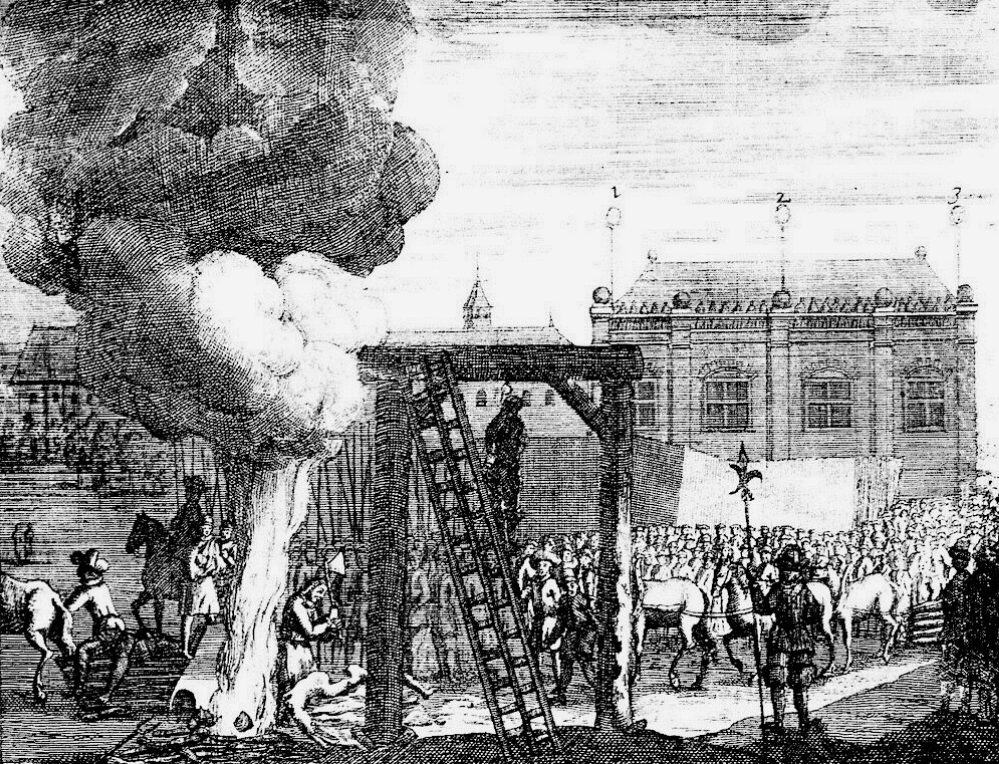
In this respect Hamilton, with no apparent sense of irony, reminds us that legislation cannot impose a responsible and democratic civic culture; it can only codify civic memory. To think otherwise is hubris. Whereas the United States Constitution was conceived “in the mild season of peace,”5 British constitutional monarchy was born through the traumas of a long, bloody, and oppressive history.
Political tradition remembers what no individual can. And what even Hamilton acknowledges to be the “liberty … to completely triumphant” that emerged from the Glorious Revolution – and, importantly, its hard-won precedents – has no true parallel in American political thought or historical experience. What the torch of liberty forgets in the burning passion of revolution, the Crown remembers in its sober and ancient traditions.
Long may that Crown endure. ♛


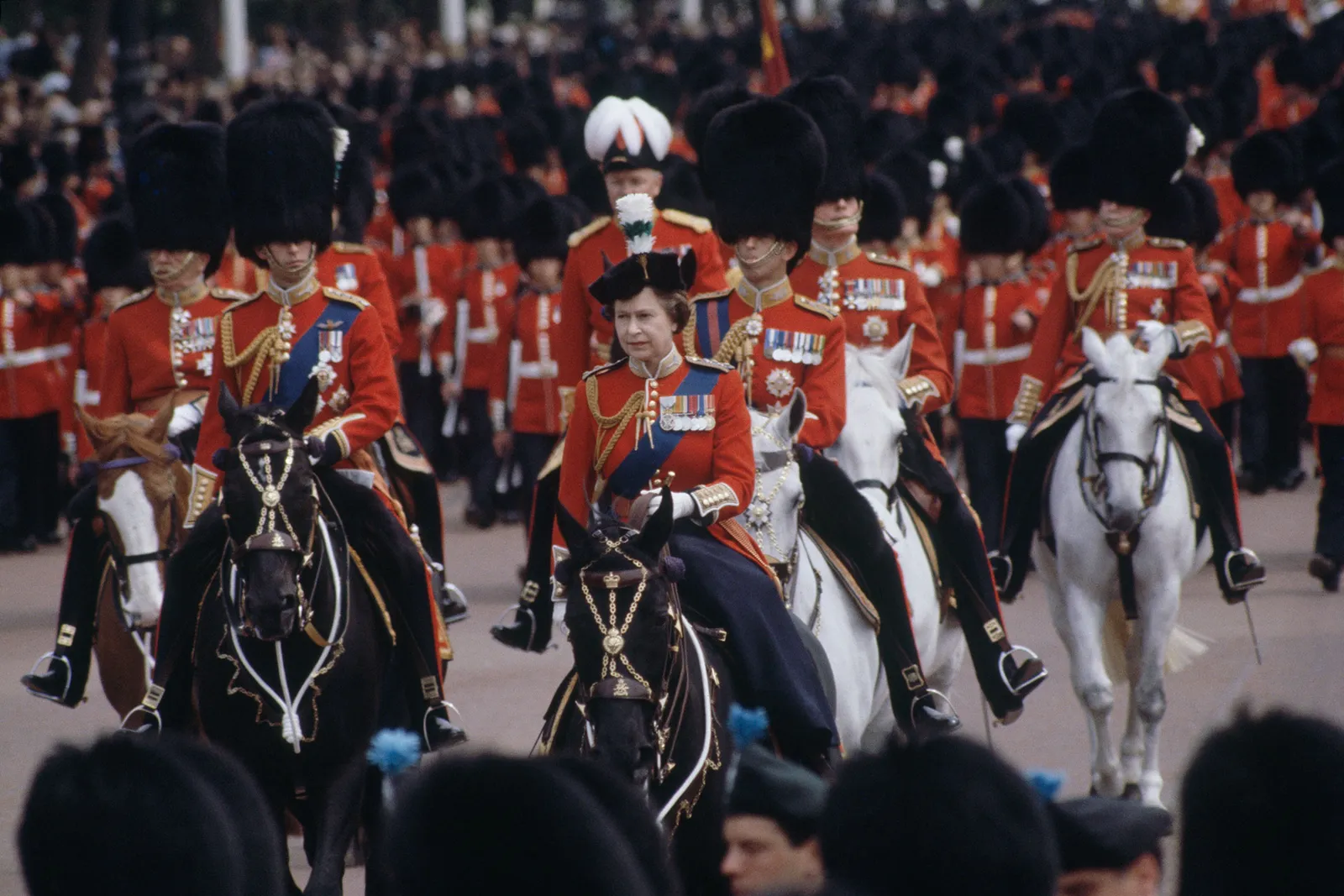
Cover image: Her Majesty the late Queen Elizabeth II leads the Trooping the Colour parade, London (1981). Photo by Serge Lemoine. Getty Images. // The event is an annual ceremony marking the Sovereign’s official (i.e. symbolic) birthday, rooted in centuries of military tradition and royal pageantry.
Footnotes
- It must be noted that the Scottish and Irish were considered by the English at this time to be foreigners.
- Article I, Section 8, Clause 12: “The Congress shall have Power … To raise and support Armies, but no Appropriation of Money to that Use shall be for a longer Term than two Years.”
- Five years is the maximum duration of any elected government in the House of Commons under the Constitution of the United Kingdom. This modern adaptation of an old tradition, so as to coincide with the normal British election cycle, is one of perhaps only a handful of American “innovations” to be reimported back into the Mother Country.
- It is noteworthy that this safeguard never took root in Canada: the English Bill of Rights applied only “within the kingdom” and was never incorporated into colonial or Canadian law. Before 1867, the defence of Canada fell within the purview of Imperial troops under British command. After Confederation, Parliament gained control over defence under s. 91(7) of the Constitution Act, 1867, but the Crown’s prerogative over the military, exercised through the office of the Governor General as Commander-in-Chief, remained intact. The National Defence Act provides continuous statutory authority for the Canadian Armed Forces; parliamentary oversight is exercised through annual funding decisions rather than explicit periodic reauthorization.
- See Federalist No. 2.