
Loyalist № 16
To the Peoples of North America, this being a Loyalist Response to Federalist No. 62:
T
he original vision of American republicanism sought to temper the passions of the people with the discipline of reason. It is one of the central themes of the Federalist Papers – Hamilton, Madison, and Jay argue over and again not for pure democracy, but for carefully crafted republican institutions. Contrary to modern assumptions, the Framers did not believe that all important offices should be filled by direct election; in fact they rejected that model explicitly. From the Electoral College, to the appointment of Senators by State legislatures,1 to the broader architecture of checks and balances, the Constitution was designed to filter the popular will through multiple forms of representation: some direct, some indirect, and some altogether appointed.
In the modern Canadian context, such institutional restraints are too often seen more as democratic defects than as constitutional safeguards. The Senate, in particular, is frequently criticized for its unelected nature – a narrow argument that echoes more broadly in debates over the monarchy and Our role in the constitutional framework of Canadian confederation. No doubt influenced by democratic norms south of the border that have evolved over the centuries, the term “appointed” has now become synonymous with unelected, and “unelected” with anti-democratic. Federalist No. 62, written by Madison on the utility of an appointed Senate, offers lessons to governments on both sides of Our border.
At the Constitutional Convention in 1787, the idea of directly electing Senators was voted down 10-1 in the Grand Committee.2 That decision, so at odds with modern sensibilities, shows just how much the popular understanding of democracy has shifted since Madison’s time. Indeed, Madison himself saw the decision in favour of unelected Senators as “probably the most congenial with the public opinion” – a remarkable assessment, given that the Federalist Papers were written to persuade a skeptical public. What now seems undemocratic was, at the time, considered common sense. In a paper totalling 2390 words, Madison dispatches the question in just 95, an indication of just how uncontroversial the idea was in his day and how little attention he thought it warranted.
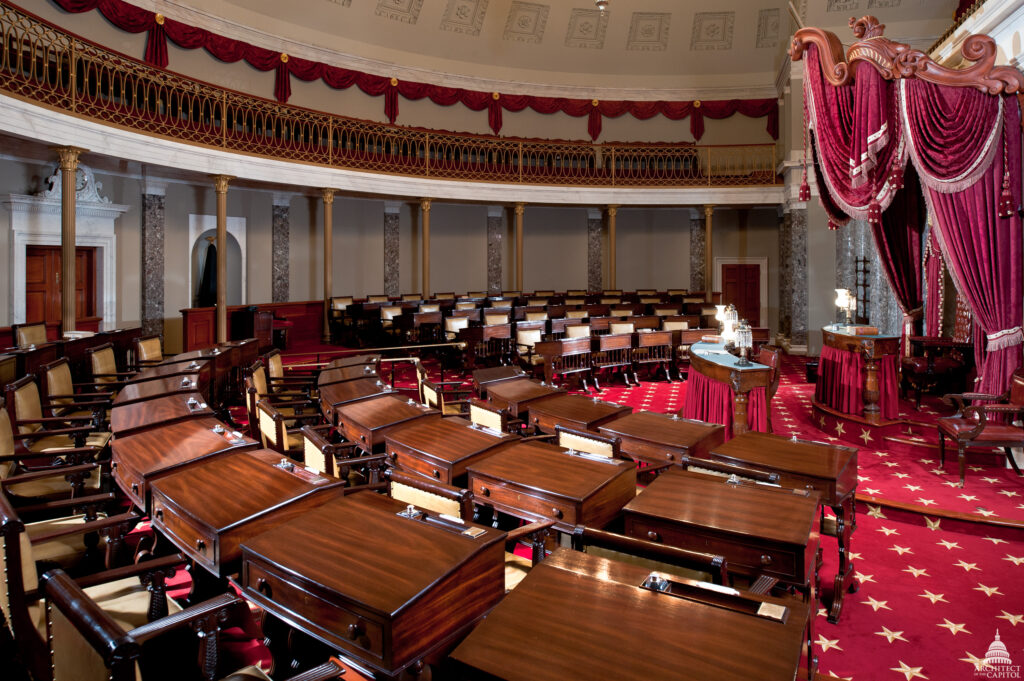
Madison recognized there are “inconveniences which a republic must suffer” that can only be corrected by an appointed Senate. Of the four key points he raises in this vein in Federalist No. 62, two are especially relevant to today’s politics: (1) that the Senate would serve as a check on populist excesses; and (2) that it would provide a level of legislative expertise unlikely to emerge from biennial elections to the House of Representatives.3
To the first point. Madison echoes his warning from Federalist No. 10, where he notes
The propensity of all single and numerous assemblies to yield to the impulse of sudden and violent passions, and to be seduced by factious leaders into intemperate and pernicious resolutions.
Experience had by then already made this risk plain: “Examples on this subject might be cited without number; and from proceedings within the United States, as well as from the history of other nations.” The fundamental role of the Senate, then, was to resist these distortions of the democratic will. To achieve that end, it must be smaller, more deliberative, and more removed from the popular whims that animate the House of Representatives.
To the second point. The Framers, who did not envision career politicians serving in the House for decades,4 believed it unreasonable to expect legislative competence from citizens drawn briefly from private life and who would have little time or incentive to master the complexities of law and policy. Unicameral legislatures of this kind will, as he puts it, inevitably “blunder” into poor policy and lawmaking, a reflection, in Madison’s phrasing, of their “deficient wisdom”. Again, a more thoughtful upper chamber would be needed to ensure the House could achieve its desired objectives in appropriate ways.
A Senate with longer terms of service, more continuity through staggered terms, and a greater degree of independence through indirect election would become the co-equal partner in the legislative process. In short, Madison believed that a well-constituted upper house would not weaken democracy, but rather dignify it – not by obstructing the popular will, but by lending it the structure, discipline, and wisdom required for the people to govern themselves effectively.
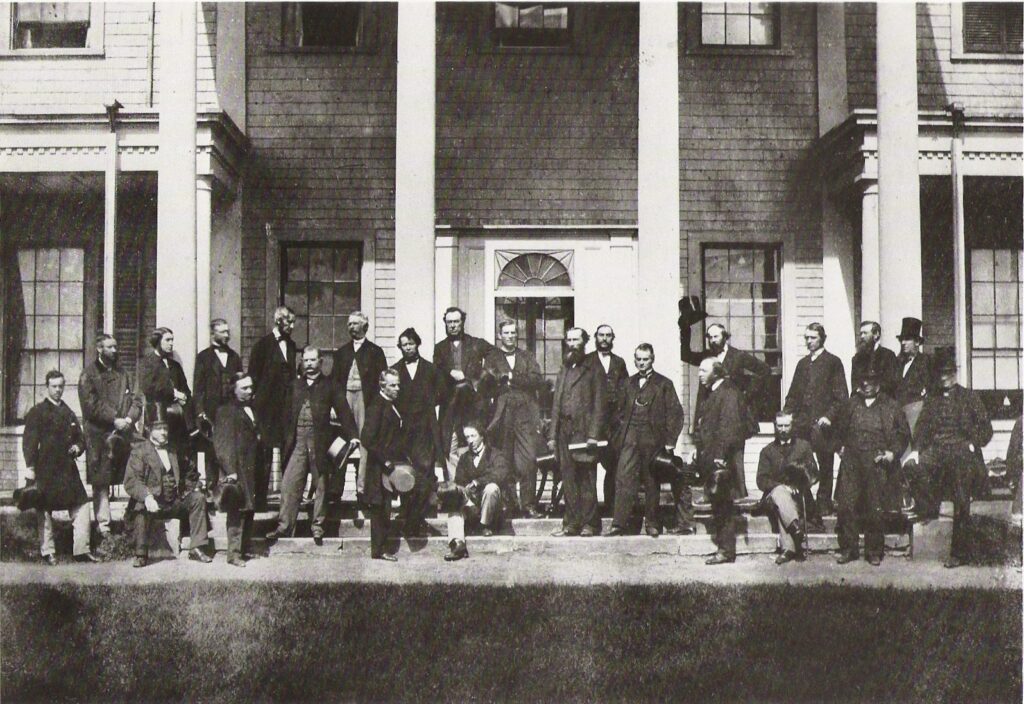
Our Senate in Canada, established nearly a century later, was designed with a similar purpose in mind. Drawing clear inspiration from Madison’s logic while remaining deeply rooted in Westminster traditions, the Canadian Senate more closely replicated the British House of Lords than the United States Senate. Amid the ongoing turmoil of the American Civil War, Sir John A. Macdonald cautioned against the dangers of unchecked popular rule and factional conflict – as did Madison. The new confederation, Macdonald believed, needed an institutional safeguard to prevent precisely the kind of instability that was then raging to the south.
It is unclear from the parliamentary record, known as Hansard, whether Macdonald ever used the exact phrase “house of sober second thought.” It is clear enough, however, that he fully endorsed an appointed Senate that would be able to act independently of the House of Commons, and for much the same reasons that Madison argues in Federalist No. 62. In a speech delivered in February 1865 to the Legislative Assembly of the Province of Canada, then located in Québec City, Macdonald argued that the proposed Senate of the Dominion of Canada
must be an independent House, having a free action of its own, for it is only valuable as being a regulating body, calmly considering the legislation initiated by the popular branch, and preventing any hasty or ill-considered legislation which may come from that body, but it will never set itself in opposition against the deliberate and understood wishes of the people.
Appointing Senators for life – later constrained by mandatory retirement at age 75 – was seen as the only way to ensure fully independent action that would be unswayed by the political winds of the day blowing through the House of Commons. As the ongoing American Experiment shows, Our Canadian leaders can only undo this delicate balance at great peril to good government.
With ratification of the Seventeenth Amendment in 1913, which replaced appointment of Senators by the State legislatures with direct election by the people, the United States abandoned the Framers’ carefully considered vision of the Senate. The effect was not merely procedural; it transformed the Senate from a body of constitutional restraint into a second popular chamber, exposing it to the same pressures of faction, short-term thinking, and electoral posturing that Madison had warned against. Drunk on partisanship and, especially in recent years, growing populism, the American Senate no longer serves its original function.5
In Canada, where Westminster traditions still reign, changes to Our Senate have taken a more organic, incremental form. True, there have been similar calls for Senators to become directly elected, and even to abolish the upper chamber altogether. Yet neither measure would preserve either the original intention of the Senate nor the basic function of bicameralism, which has already disappeared in every one of Our provinces. And, in any case, neither of these proposed changes can be implemented without amending the Constitution.6
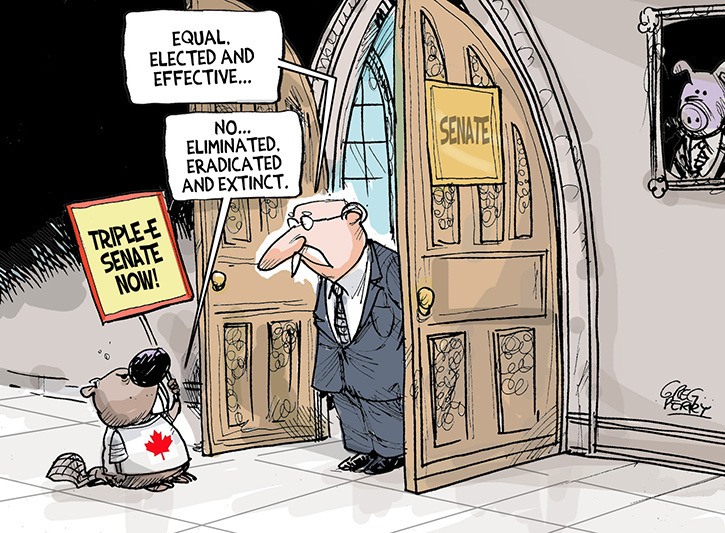
In the 1980s and 1990s, reformers in Our western provinces advanced the idea of a “Triple-E Senate” (meaning equal, elected, and effective) that was intended to replicate the modern American version of an upper house. Alberta characteristically led the charge, going so far as to hold popular elections to determine the names of those to be referred, nominally, to the Prime Minister for “consideration” for appointment. Four Senators from Alberta – Stan Waters, Bert Brown, Betty Unger, and Scott Tannas – were all “elected” in this way and then, more technically, appointed to the Senate by prime ministers Mulroney and Harper. Tannas continues to sit in the upper chamber.
While Alberta persists even today in holding “consultative elections” for Senate nominees, such votes have been rendered legally meaningless by the April 2014 Supreme Court Senate Reform Reference. The Prime Minister retains final authority in appointing such nominees; under successive prime ministers from Jean Chrétien onward, many candidates were “elected” but never appointed to the Senate. In other words, the Court – and several prime ministers it would seem – reaffirmed what Macdonald and Madison had both understood: that the Senate cannot function as a chamber of sober second thought if it is to be subject to the same partisan incentives and electoral pressures that shape the lower house. There is nothing to be gained, but much to be lost, by reduplicating the Commons in the upper chamber.
Mere months before the Supreme Court issued its reference decision, Justin Trudeau, then in Opposition, had already anticipated the need for a different approach. In January 2014, he took the unprecedented step of expelling all Liberal Senators from the national caucus, declaring that partisan control had eroded the Senate’s ability to function as an independent check on the government of the day. Though many of those Senators continued to identify as Liberals until 2019, they no longer took direction from elected members in the House of Commons.
After Trudeau became Prime Minister, he built on these reforms, establishing the Independent Advisory Board for Senate Appointments in 2016. Trudeau’s quasi-constitutional changes sought to restore the Senate’s dignity and independence through a merit-based, non-partisan appointment process. Candidates now apply through an open public process and are selected by a panel of eminent Canadians with no formal ties to any political party. Trudeau’s goal was specifically not to democratize the Senate, but rather to rehabilitate it within Our original constitutional framework, as he explained to broadcaster and Canadian icon Peter Mansbridge:
Today Senators are organized into four principal groups, plus a number of unaffiliated members: the Independent Senators Group, the Progressive Senate Group, and the unimaginatively named Canadian Senators Group. Only the Conservative Party retains formal ties to a group of 12 party-affiliated Senators.
Trudeau’s Senate reforms may well be the most understated achievement of his decade as Prime Minister. At a stroke, he restored much of Macdonald’s original vision of the upper chamber. He did so for reasons that, ironically, were perhaps best articulated by Madison, who concludes Federalist No. 62 this way:
The most deplorable effect of all is that diminution of attachment and reverence which steals into the hearts of the people, towards a political system which betrays so many marks of infirmity, and disappoints so many of their flattering hopes. No government, any more than an individual, will long be respected without being truly respectable; nor be truly respectable, without possessing a certain portion of order and stability.
What Madison was compelled to explain to his own republican compatriots was obvious to those Loyalists who fled the Revolution of 1776 – that respectability and stability ultimately spring not from the font of popular elections, but from an inherent legitimacy derived from peace, order, and good government under the Crown.
God save the King. ♛


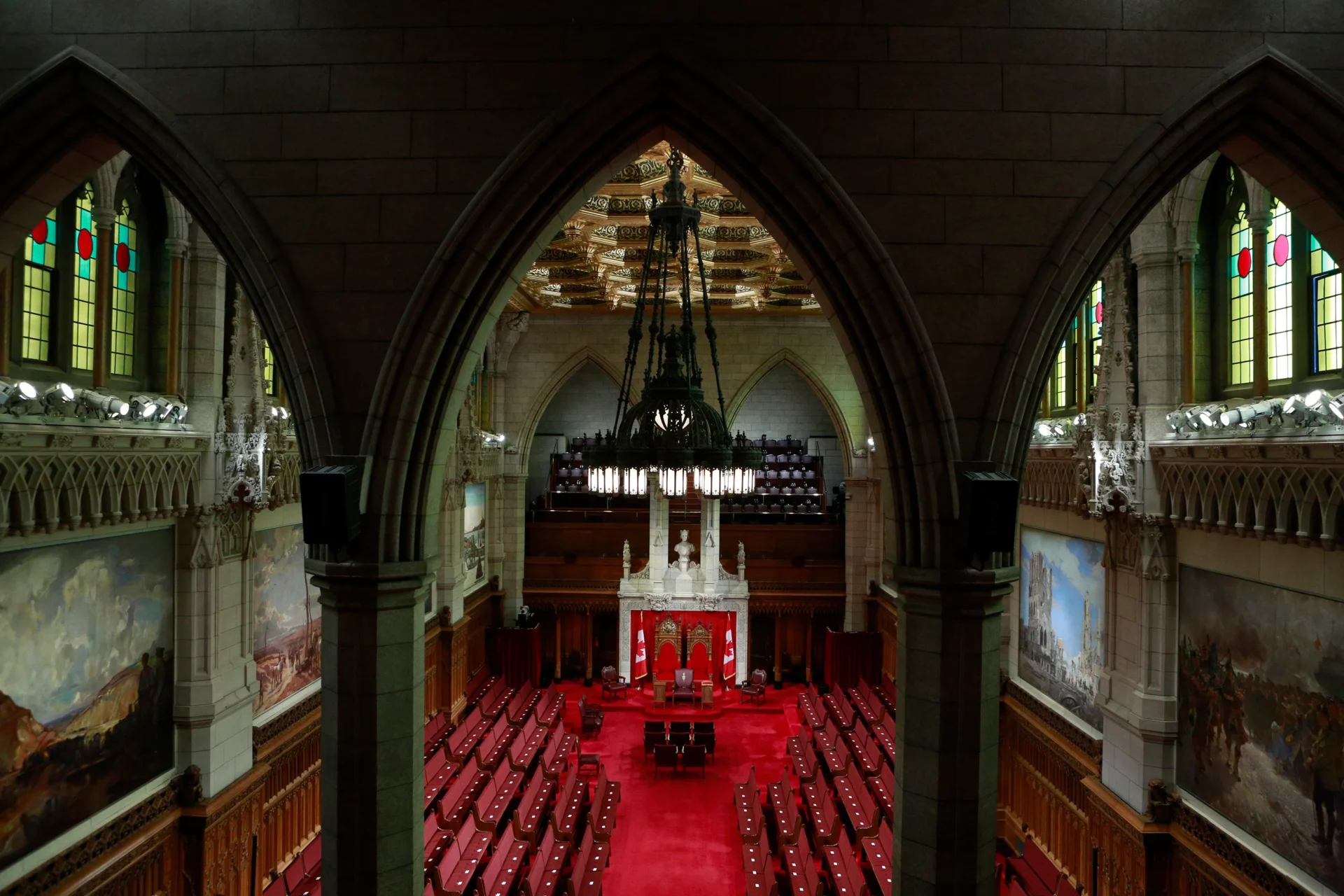
Cover Image: The red chamber of the Senate of Canada, located in Parliament’s Centre Block, has been closed for renovations since 2018. It is expected to reopen in 2031.
Footnotes
- Article I, Section 3, Clause 1: “The Senate of the United States shall be composed of two Senators from each State, chosen by the Legislature thereof, for six Years; and each Senator shall have one Vote.”
- James Wilson of Pennsylvania was the only one to vote in favour.
- Madison’s other points are that a second chamber would act as an additional check on power, and that staggered six-year terms would provide policy stability. An additional fifth point, treated in Federalist No. 63, explores the Senate’s role in international affairs.
- John Dingell, Democrat of Michigan, holds the record for the longest continuous service in the history of the U.S. House of Representatives. First elected in a 1955 special election to succeed his late father, he went on to win 29 consecutive terms and served uninterrupted for nearly 60 years, retiring in 2015.
- The change has also undermined Madison’s vision of “giving to the State governments such an agency in the formation of the federal government as must secure the authority of the former, and may form a convenient link between the two systems.” Since passage of the Seventeenth Amendment, States play virtually no direct role in the federal government.
- The steep threshold of the Constitution’s amending formula and successive failures to meet it, explored in Loyalist No. 2, are no doubt a heavy influence on Canada’s more piecemeal approach to constitutional change.