Loyalist № 8
To the Peoples of North America, this being a Loyalist Response to Federalist No. 68:
T
he theory and history of the American Electoral College is layered with irony. One of the last items to have been finalized at the Constitutional Convention, it was deemed by Alexander Hamilton in Federalist No. 68 to have “escaped without severe censure, or … the slightest mark of approbation from its opponents” during even the charged political debates on ratification that followed. In modern times, however, the method of choosing the President of the United States of America has become much more contentious than it apparently was at the time the Electoral College was devised.
The Framers debated several mechanisms for choosing the president. Direct election by the people was rejected because it would tend to favour the more populous North over the slave-holding South. Election by the states, too, was rejected on the grounds that state and regional interests might come to dominate, and so weaken, the national executive. Election by Congress – not uncommon among democracies even today – was rejected for fear that it would undermine the separation of powers and so too the independence of the presidency vis-à-vis the legislative branch. Unable to reach agreement on the method of election, the Framers delegated the question to a “Grand Committee” to sort out.
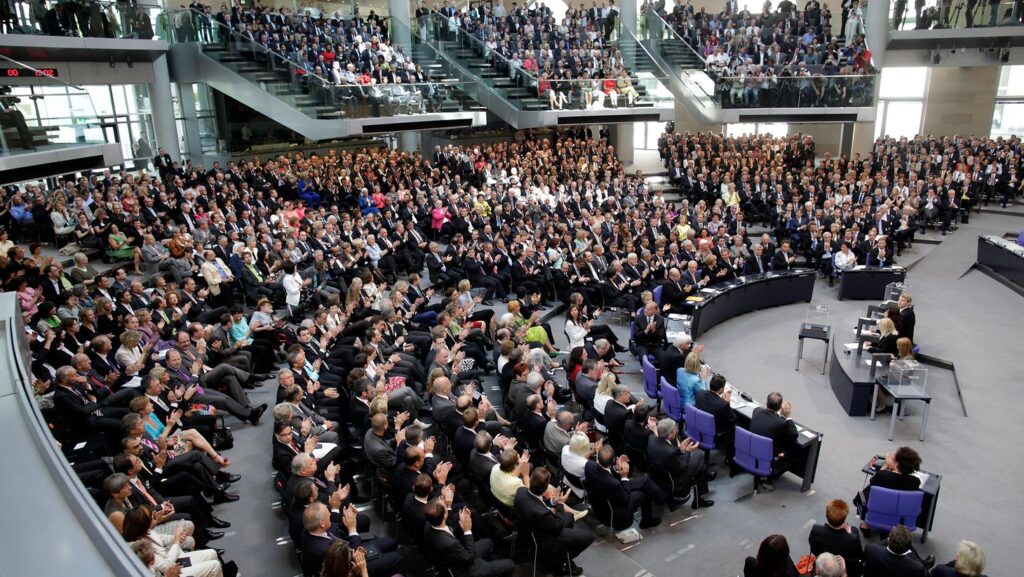
That eleven-member committee devised the Electoral College as a means of indirect election. The people would essentially delegate their choice of President to the best and brightest of their state. Meant to be chosen for their wisdom and impartiality – no incumbent state or federal office-holders would be eligible – the Electors would meet exclusively for the singular purpose of electing a President and then disband. The candidate with a majority of electoral votes would become President, while the one with the second-most votes would become Vice-President.
Hamilton, a delegate to the Convention but who was not himself part of the committee that developed the proposal, reasoned that:
It was equally desirable, that the immediate election should be made by men most capable of analyzing the qualities adapted to the station, and acting under circumstances favorable to deliberation, and to a judicious combination of all the reasons and inducements which were proper to govern their choice. A small number of persons, selected by their fellow-citizens from the general mass, will be most likely to possess the information and discernment requisite to such complicated investigations.
Serving almost as a kind of conclave, the Electoral College was to be a grand exercise in truly deliberative democracy. In theory it struck a good balance between many sets of competing interests: federal versus state power, small states versus large ones, and popular will versus wise statesmanship.
As originally conceived, however, the Electoral College failed almost immediately. After George Washington’s second term, factions had emerged even among the authors of the Federalist Papers. Alexander Hamilton became prominent among the Federalists, an early predecessor of today’s Republican Party, while James Madison’s Democratic-Republicans would quickly evolve into the Democratic Party. In this context, the 1796 vote of the Electoral College returned an absurd result: John Adams, a Federalist, won the presidency, while Thomas Jefferson, a Democratic-Republican, was elected Vice-President. The executive was instantly divided against itself.1
The 12th Amendment, ratified in time for the 1804 presidential election, addressed the immediate flaw: separate ballots would be held when choosing the President and the Vice-President. Yet this did nothing to safeguard the original vision of wise statesmen chosen by impartial quasi-juries of thoughtful Electors to lead the country. On the contrary, the 12th Amendment implicitly recognized the impracticality of that ideal within an inherently partisan political system. Hamilton’s fears were gradually being realized, that the presidency might in time “fall to the lot of any man who is not in an eminent degree endowed with the requisite qualifications.” Now it was more likely that the office would be sought as a prize by those of “talents for low intrigue, and the little arts of popularity.”
The rise of political parties following Washington’s presidency completely transformed the Electoral College in practice. Electors were increasingly chosen not for their independent judgment but for their explicit pledges of loyalty to a particular party and its presidential candidate. As democratic norms shifted over time, direct election gained greater legitimacy – it had always been used to elect members to the House of Representatives, after all. State laws soon formalized these norms, mandating that Electors vote according to their state’s popular vote, leaving them to perform a purely ceremonial role in a system that had been designed for a fundamentally different purpose.
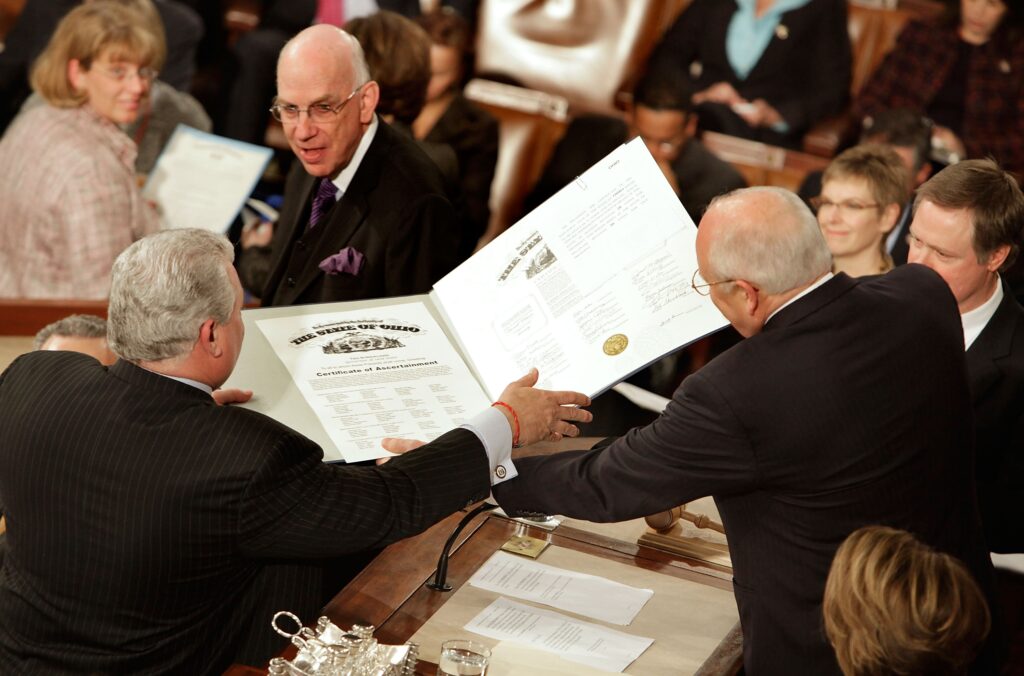
Efforts to reform the Electoral College, or even abolish it altogether, have ever since been the most frequent part of the Constitution to be subject to proposed amendments. More than 1,000 amendments have been introduced to alter it since the ratification of the Constitution, including one by Hamilton himself in 1802, when he proposed that Electors be chosen at the district level rather than by the states. Perhaps fittingly, but no less tragically, Hamilton, a Federalist, was killed in a duel with Aaron Burr, then Thomas Jefferson’s Democratic-Republican Vice-President, in 1804. His dream of an effective Electoral College and a nonpartisan presidential system as envisioned by the Framers died with him.

America’s failed experiment with the Electoral College shows the limitations of reinventing government purely on the basis of reason, as the Founders sought to do, as opposed to adapting existing institutions based on practical experience. One of the great ironies of the Electoral College is that Westminster parliamentary democracy – explicitly rejected by the Framers – yields many insights into the problems that the Grand Committee of the Constitutional Convention had had to grapple with. And it provides similar insight into Our Own constitutional troubles in more modern times.
The theory of the Westminster system is this. Voters elect representatives, called Members of Parliament, to give voice to the values, interests, and priorities of their home districts, called ridings. In the United States, each presidential election is essentially a series of state-level elections held at the same time; so, too, in the Westminster system, general elections are simply district-level votes held simultaneously in all ridings across the country. After each general election all MPs convene in the House of Commons, where they express their confidence in one of their own to provide “advice” to the Monarch as the Prime Minister and head of government.
In principle, government is built from the ground up, in a process not entirely unlike the one the Framers imagined. Both begin with local elections, where voters choose either MPs or Electors to deliberate on who will serve as head of government. Leadership is determined indirectly, with MPs selecting a Prime Minister based on the principle of confidence, just as Electors were to cast votes for President on behalf of their states. Both systems draw on regional results to form a national consensus, balancing local and federal interests. The key difference is that the Framers explicitly did not envision the Electors playing any role in the legislative branch. They were to do their duty and be dismissed.
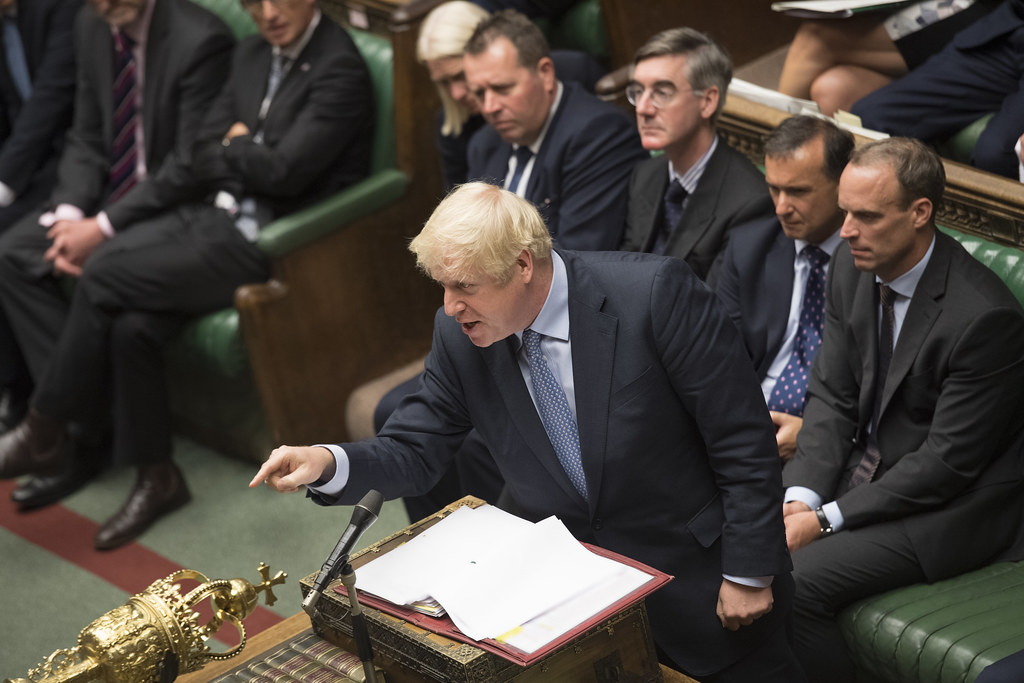
And of course, practice always diverges from theory. While voters nominally elect MPs to represent their ridings, today party affiliation tends to take precedence over the personal qualities of individual candidates. Further, there is no longer any deliberative aspect in the House of Commons when it comes to selecting the Prime Minister; nowadays it is a well established convention that the leader of the party with the most seats will assume the role – even if that leader changes before the next general election. Any deliberative function as to leadership is done at party conventions or through membership votes, usually well ahead of a general election.2
Elsewhere in the Federalist Papers, Hamilton, Madison, and Jay worry that blurred boundaries between the executive and legislative branches would lead to a domineering executive. Yet the Westminster system shows that this need not always be the case. In the United Kingdom, MPs retain significant independent power as representatives of their ridings. Backbench MPs, including those from the ruling party, regularly challenge their own Prime Minister during the weekly tradition of Prime Minister’s Questions. They also propose private member’s bills, sometimes on niche issues, that pass into law. These practices ensure MPs remain accountable not only to party leadership but also to their constituents, effectively balancing local representation with national governance. Unlike the American experience, the Westminster system has grown around the emergence of political parties, demonstrating much greater flexibility.
That flexibility, however, sometimes cuts both ways. In contrast to British Members of Parliament, Canadian MPs are almost entirely beholden to their party and rarely dissent from the party line. It is exceptionally rare for a government backbencher to challenge the Prime Minister or the front bench during Question Period,3 and private member’s bills typically do not pass into law without the endorsement of the government of the day. Either because of that fact or as a result of it, Canadians almost always vote based strictly on party affiliation and party leadership rather than the individual qualities of local candidates.
While Our Constitution provides that We have established a political system “similar in Principle to that of the United Kingdom,” Our political culture has increasingly taken on the distinctive character of American democratic norms. Much as Americans vote for their preferred President, sidelining local Electors, so too do We in Canada vote for Our preferred Prime Minister, overlooking local candidates. By behaving like Americans, as though We directly elect Our head of government, We have, with little sense of irony, disempowered Our MPs, rendering them more so “similar in principle” to America’s rubber-stamping Electors.
Canada, it would seem, has an electoral college all Our Own. ♛


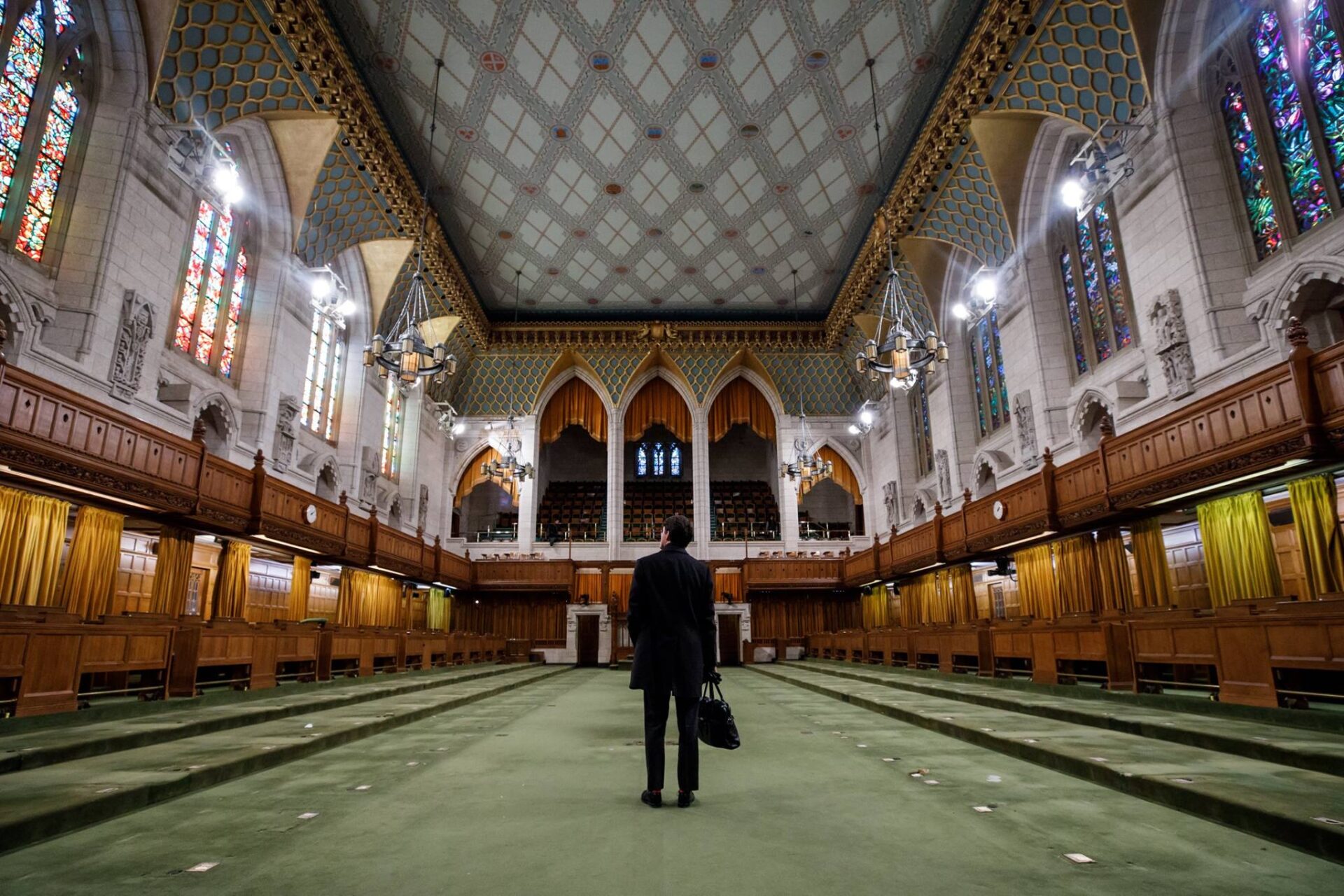
Cover image: Prime Minister Justin Trudeau in the emptied House of Commons chamber, with all desks removed. Photo by Adam Scotti (2018). Courtesy of the Prime Minister’s Office, Canada. // The House of Commons, along with the rest of Parliament’s Centre Block, is undergoing extensive restoration work that is not expected to be completed until 2031.
Footnotes
- See Loyalist No. 6 for Our consideration of the Framers’ views on a unitary presidency versus a plural executive.
- This also means that, in rare cases, someone who is not a sitting MP – like Mark Carney – can become Prime Minister, with the expectation that he or she seek a seat in the House at the earliest opportunity.
- In fact, We would challenge readers to identify even a single instance of this happening in Canada’s House of Commons.