
Loyalist № 17
To the Peoples of North America, this being a Loyalist Response to Federalist No. 51:
I
n his very first week after returning to office, President Trump moved swiftly to purge career civil servants responsible for internal oversight of government operations. Over a dozen inspectors-general – whose role it is to ensure legal and policy compliance – were abruptly fired on January 27, 2025. More worrisome still, the executive action was taken without the legally-required 30 days’ notice to Congress or an official rationale. The move appeared as a direct challenge to Congress to defend its legislative authority against executive overreach. Some observers suggested that the firings are a calculated test of other institutions, including the courts, to see how or even whether they will enforce the checks and balances the Framers built into the U.S. Constitution.
It is in Federalist No. 51 that “Publius” – likely James Madison – addresses what is perhaps the most famous of all American constitutional concepts. He articulates the principles of the Constitution’s design in this way:
Ambition must be made to counteract ambition. The interest of the man must be connected with the constitutional rights of the place. It may be a reflection on human nature, that such devices should be necessary to control the abuses of government. But what is government itself, but the greatest of all reflections on human nature? If men were angels, no government would be necessary. If angels were to govern men, neither external nor internal controls on government would be necessary.
Madison posits that the personal ambitions of public office-holders can and must be made to align with the constitutional interests of their offices; that a careful balance can be struck between competing public and private interests; and that, further, a greater collective good will naturally emerge from that balance. How, then, to achieve that balance?
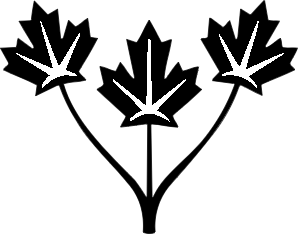
That question bears a striking resemblance to one that plays out vividly in the 2019 HBO miniseries Chernobyl. “Tell me,” character after character asks, “how does an RBMK reactor explode?” After more than four and a half hours of witnessing the devastation wrought by the 1986 Chernobyl nuclear disaster, at last, that question is answered in one of the final scenes of the series.
Valery Legasov, the nuclear scientist at the centre of the investigation, stands before his colleagues at a Soviet show trial and explains in plain terms how an RBMK reactor like the one at Chernobyl works. “There are essentially two things that happen inside a nuclear reactor: the reactivity which generates power either goes up” – here he holds up a red placard – “or it goes down” – here he holds up a blue placard. “That’s it. All the operators do is maintain balance.”

The same principle applies to the machinery of a republic: its energy must be carefully regulated.1 When the energy of government rises unchecked,2 it risks surging into tyranny; when it declines too far, it stalls into gridlock or chaos. The role of institutions, as the Founders envisioned, is to maintain this equilibrium through a system of checks and balances – preserving a government vigorous enough to act decisively yet restrained enough to protect liberty.
Madison begins with ambition, the raw fuel that motivates political activity. Citing the state of nature – presumably the Hobbesian version – Madison suggests that ambition always seeks to concentrate power fully and completely, leading to tyranny if it goes unchecked. It being rooted in the concept of power as it exists in the state of nature, Madison conceives of republican government beginning from the principle that the people are the ultimate “fountain of authority.”
Through direct elections, the political will of millions of citizens is concentrated, or enriched, into more energetic political offices. At the same time, elections also serve to establish political norms that foster accountability, thereby decreasing the energy of such offices. Yet elections and the norms they foster, while necessary safeguards against tyranny, are still insufficient to establish good government. Energy goes down, though not in the same proportion as elections increase it.
“In republican government,” Madison asserts, “the legislative authority necessarily predominates.” Far from warning against what he calls the “weaker” powers of the executive, Madison anticipates that the legislature’s ability to craft laws gives it immense power, which is only further amplified insofar as its direct link to the people gives it greater claim to legitimacy. The concentration of power that is essential to its function might, Madison surmises, lead the legislative branch to become overbearing in relation to the other branches of government. Energy goes up.
Guarding against the risk of legislative overreach, the Framers established a bicameral Congress, with the House of Representatives and the Senate each having “different modes of election and different principles of action.” The House, chosen through direct election by the people every two years, was designed to be highly sensitive to the will and mood of the electorate, with representation based on population. In contrast, members of the Senate were to be chosen through indirect election by state legislatures – a critical check that was later eliminated with the Seventeenth Amendment – every six years, with each state equally represented by two Senators. The design of Congress was meant to foster compromise and negotiation between popular interests and those of the states, which were presumed to be more calm and deliberate.
Further mitigating the risk of excessive energy in Congress, Madison argues that political authority must be “divided.” This division occurs in two primary ways. The first is through federalism, which distributes the sovereign will of the people between national and state governments. It is clear throughout the Federalist Papers that the Framers worried that directly elected bodies, though rooted in popular legitimacy, might still amass excessive power and become too energetic. The French Revolution, though it broke out after ratification of the U.S. Constitution, is the perfect example of excess popular energy destabilizing political order.
The second way the Constitution divides political authority is through the separation of powers, which distributes authority across three distinct branches of government at each level – executive, legislative, and judicial. These branches exercise different but complementary powers. In combination with federalism, the separation of powers results in six distinct centres of authority across the Republic, all working to protect their own spheres of policymaking against the others. Federalism and the separation of powers are meant to ensure that no single office or institution dominates – and certainly not any that are exclusively chosen through direct popular election.
Notwithstanding these intricate safeguards, Madison foresaw – even feared – the dynamic energy of factions, meaning the diverse, competing interest groups that struggle against one another for dominance. While recognizing that factionalism is inevitable under any government that promotes liberty, the Framers nevertheless believed them to be inherently dangerous inasmuch as they are driven by intense passion and narrow interests that risk destabilizing the Republic.

Ironically, the party system has come to play an important role in preventing unchecked ambition of factions from burning too hot. The Framers would have preferred that Americans decide their political positions based not on partisan sympathy but on reason and deliberation, as they themselves had done in designing the Constitution. Nevertheless, the emergence of the party system in the early days of the Republic has come to play an important role in the system of checks and balances: “big tent” partisan politics forces negotiation and coalition-building between factions if they are to win power. Energy goes down.
Let’s summarize Madison’s political theory. Ambition and direct elections increase energy in the Republic, while political norms and federalism decrease it. The separation of powers further decreases energy. Faction increases it, while indirect elections and the party system decrease it. In this way, the Framers deliberately designed American institutions to ensure alignment between the interests of the people and their passions, the powers of the states and those of the Union, the rights of the individual and the good of the collective.
In contrast to the carefully engineered machinery of the American Republic, Canada’s constitutional order more so embodies Alexander Pope’s aphorism,
As the twig is bent, so grows the tree.
— Alexander Pope, “Epistles to Several Persons” (1732).3
Unlike the United States, where the separation of powers, for instance, was designed from the outset to constrain legislative and executive authority, Canada’s checks and balances evolved incrementally, shaped by convention, political restraint, and adaptation to changing circumstances.
The principle of responsible government, which took root in the mid-nineteenth century, became the first major check on authority in the context of an executive that was fused to the legislature. It ensures that the Prime Minister and Cabinet can only govern with the confidence of the elected House of Commons. This provides a mechanism for removing leaders who have lost the support of Parliament, a power of the House that has no equal in American democracy short of impeachment. However, the principle of confidence as a constraint on government functions very differently depending on political circumstances.
Under majority governments, the Prime Minister enjoys significant control, as party discipline all but guarantees that the government can pass legislation with little opposition. In these cases, internal party dissent has proven to be a more effective check on power than Parliament itself. Some Prime Ministers have faced dissent within their own cabinets intense enough to force them from power. For example, Prime Minister Justin Trudeau had little choice but to resign earlier this year amid a full-scale caucus revolt. Not altogether dissimilarly, John Diefenbaker (1957-63), Pierre Trudeau (1979-84), and Jean Chrétien (1993-2002) all faced party leadership crises toward the end of their mandates. Still, these examples remain exceptions rather than the rule in Canada.
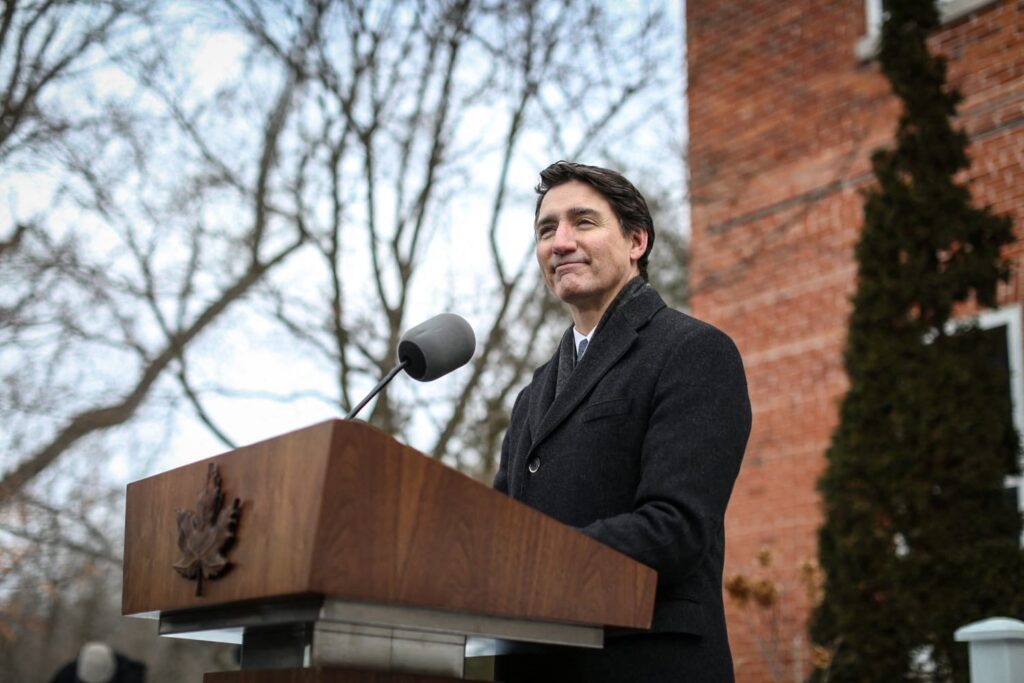
Over time, however, the executive has widenned like the trunk of a tree, overshadowing the branches that once played a larger role in governance. Power has become more centralized, not just in the House of Commons under strict party discipline but also, and more worryingly, beyond it. The growing concentration of power in the Prime Minister’s Office (PMO) has reduced the influence of both cabinet ministers and backbench MPs alike.
Working through the PMO, upwards of 100 political appointees enforce party discipline, often limiting MPs’ ability to challenge leadership decisions. In some cases PMO staffers have wielded considerable power even over cabinet ministers – threatening the fundamental principle of responsible government upon which Westminster democracy is founded. Attorney-General Jody Wilson-Raybould, for example, resigned in 2019 amid a concerted pressure campaign that had been mounted against her from within the PMO during the SNC-Lavalin affair.
By contrast, minority governments have proven to be a more effective check on executive power – one that is only possible precisely because of the looser concept of separation of powers in the Westminster system compared to the American Republic. Without the guaranteed support of the majority of members in the House, a minority government is forced to negotiate and compromise with opposition parties. Indeed, some of Canada’s greatest legislative achievements were made under the constraints of minority government. Universal healthcare, the Canada Pension Plan, official bilingualism, and the adoption of the maple leaf flag were all done under Lester Pearson’s minority mandate in 1963-68. Similarly, equal marriage was enshrined in law under Paul Martin’s minority government in 2005, even if by that time a series of provincial appeals court decisions had all but achieved the same end.
Beyond electoral dynamics, the division of powers between federal and provincial governments remains one of the most enduring constraints on the Prime Minister’s authority, growing and changing with the political seasons. From Confederation in 1867, Canada’s system of government was designed to prevent excessive centralization by allocating complementary jurisdictional powers to the federal and provincial governments. Our constitutional design is intended to force negotiation and compromise between these different levels of government. For example, responsibility for the criminal law is federal jurisdiction, while the administration of justice is provincial; trade and commerce is federal, while property and civil rights is provincial; environmental regulation is federal, while natural resources is provincial. Similarly, the federal government is responsible for ensuring equal access to public services across the country, while the provinces hold jurisdiction in the areas of health and education – typically the largest expenditures in the provincial budgets.
However, this division of powers has also led to recurring conflicts, particularly as federal policies have increasingly intersected with provincial jurisdiction. Fights over the carbon tax, which saw Alberta and Saskatchewan challenge the federal government’s right to impose a national price on carbon, became a major constitutional battle in the courts. Similarly, disputes over equalization payments and fiscal transfers have fueled regional grievances, leading provinces like Alberta and Saskatchewan to assert their autonomy over areas of federal jurisdiction. Alberta’s Sovereignty Act and the Saskatchewan First Act represent a severe escalation of these tensions. These tensions raise difficult questions about the resilience of Canada’s living constitutional tree, whether it will bend with the political winds or break under the force of regional strain.

While Canada’s checks on power have in general evolved gradually through parliamentary accountability and federalism, the most significant transformation came with the adoption of the Canadian Charter of Rights and Freedoms in 1982, which was something of a seedling grafted onto the judicial branch of Our constitutional tree. After 43 years of Charter jurisprudence, responsibility for protecting civil liberties has shifted significantly from Parliament and the provincial legislature to the judiciary.
For good or ill, the Supreme Court of Canada is now the supreme check on the exercise of power in the federation. It is the final arbiter not just on the division of powers but also on questions relating to the individual rights of Canadians. Since the Charter’s entering into force, the Supreme Court has struck down a wide variety of laws for infringing on rights like freedom of expression, freedom from discrimination, due process, security of the person, and others. As a result, the Supreme Court has emerged as the most powerful institutional check on both legislative and executive authority in Canada.
Borrowing again from Legasov, We might describe the U.S. Constitution’s careful choreography as “the invisible dance” intended to power the republican form of government without strife or war. “And it is beautiful… when things are normal.” But what happens when the machinery falters?
The Framers designed impeachment as a final safeguard against an overly energetic executive – a constitutional AZ-5 button meant to halt tyranny before it could overheat and melt down through the Republic. But like Chernobyl’s flawed failsafe, impeachment has been tested. And it has failed again and again. Used four times against three administrations without ever having removed a sitting President, impeachment has devolved into a ritual of partisan spectacle rather than a functioning emergency brake. It no longer neutralizes threats to the Republic; instead, it feeds the reaction, accelerating division rather than restoring balance.

Where, then, does that leave North America’s last Loyalist redoubt?
Canada’s Constitution did not begin as an engineered machine; it was planted like a sapling and cultivated through generations of tradition and jurisprudence. Our Westminster system has no mechanical failsafe to address an existential constitutional crisis – only Our organic resilience. Our last and perhaps best hope against executive and legislative excess is to be found in the unwritten, unseen, and largely untested roots of Our system: the reserve powers of the Crown. One can only hope that, should Our tree be caught in a storm, it bends rather than breaks; that, should We be uprooted, We might with time right Ourselves again and grow in new directions. ♛


Cover image credit: The Control Room at Chernobyl Nuclear Reactor 4 in 1986.
Footnotes
- We readily admit to pickier readers that this allegory is anachronistic. Yet the concept of balance is at the heart of nearly all early political philosophies, both Western and not. For that reason We decided to give it a try.
- Again, for sticklers, it is worth noting that the authors of the Federalist Papers very deliberately use the term “energy” in the way We have here to mean a vigorous and decisive government that must be balanced with other forms of power to ensure the preservation of liberty. Hamilton explores the concept in greater depth in Federalist No. 70; We Ourselves address it directly in Loyalist No. 6.
- It could scarcely be more appropriate that this quote itself is an evolution of Pope’s original phrasing, “‘Tis education forms the common mind, / Just as the twig is bent the tree’s inclined.”